

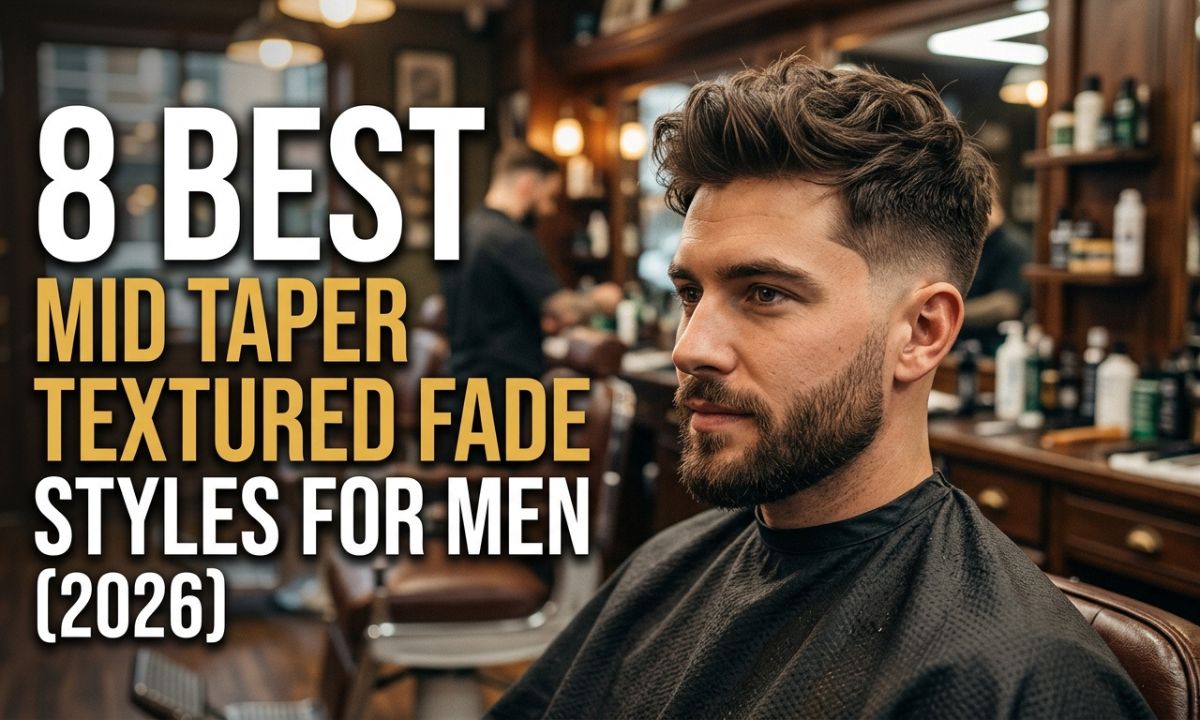
The mid taper fade with a textured top is one of the most requested men’s haircuts right now. It looks sharp. It looks relaxed. It works at the office, at the gym, and on a night out. Best of all, it fits almost every hair type.
This guide covers eight top styles, plus everything you need to pick the right one. You will learn what to ask your barber, how to style it each morning, and which mistakes to avoid. You will also see how it works with a beard, with short hair, and with straight hair. Let’s get into it.
8 Best Mid Taper Fade Textured Fringe Styles
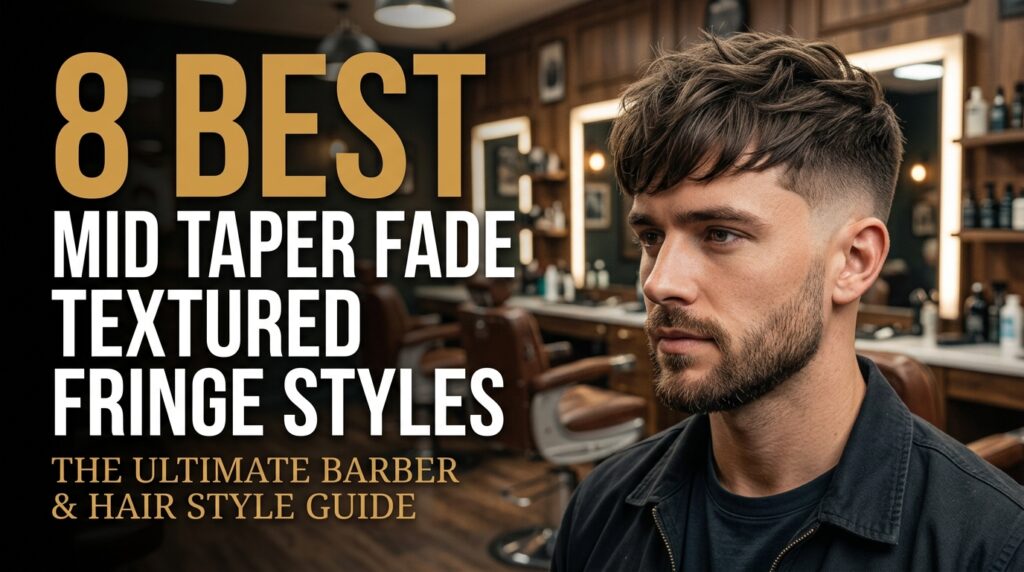
A mid taper fade keeps the sides short and clean. The hair slowly gets shorter as it moves down toward the ear and neckline. The “mid” part means the fade starts around the middle of the head, near the temple. This gives a clean look without being too bold.
A textured fringe sits on top. The front hair falls forward onto the forehead, but it is cut in layers. This gives it movement and a lived-in feel. The two parts together make a haircut that is neat on the sides and casual on top.
Below are eight versions to consider. Each one has its own mood. Pick the one that fits your hair, your face, and your daily routine.
Classic Textured Styles
These two styles are the base of the whole trend. If you are new to the fringe, start here.
1. Classic Textured Fringe
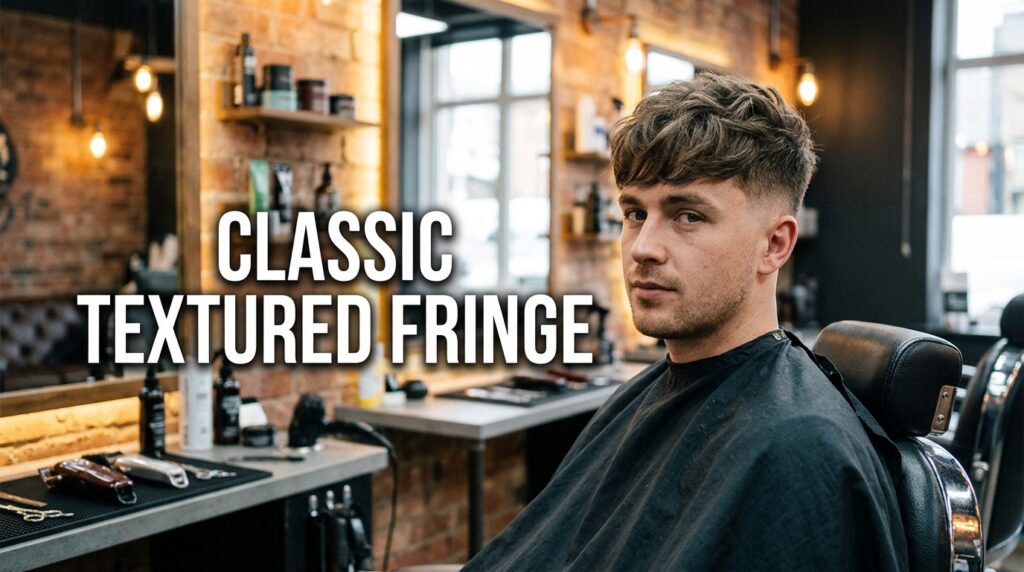
This is the standard version. The top is about 2 to 4 inches long. The barber cuts small layers into the hair so it does not sit flat. The fringe falls forward and sits just above the eyebrows.
It is easy to style. A little clay or paste is all it takes. You can wear it messy or neat. It also grows out well, which gives you more time between visits.
Best for: straight or slightly wavy hair, most face shapes, first-time fringe wearers.
2. Choppy Textured Fringe
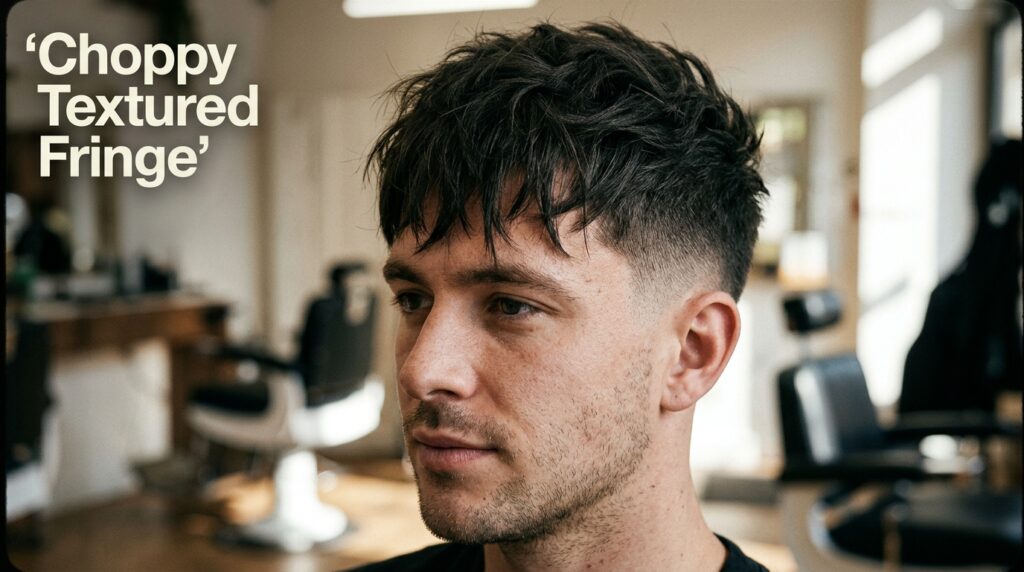
The choppy version uses sharper, more uneven cuts. The barber uses a razor or point cutting to break up the ends. The result is a rough, piecey look with a lot of edge.
This style hides thin spots well. It also adds the look of thickness to fine hair. Because it is messy by design, you do not need to be perfect when you style it.
Best for: fine or thin hair, younger guys, anyone who likes a bold, casual look.
Volume-Focused Variations
These styles add height and lift. They suit men who want the hair to look fuller and more styled.
3. Textured Fringe with Volume
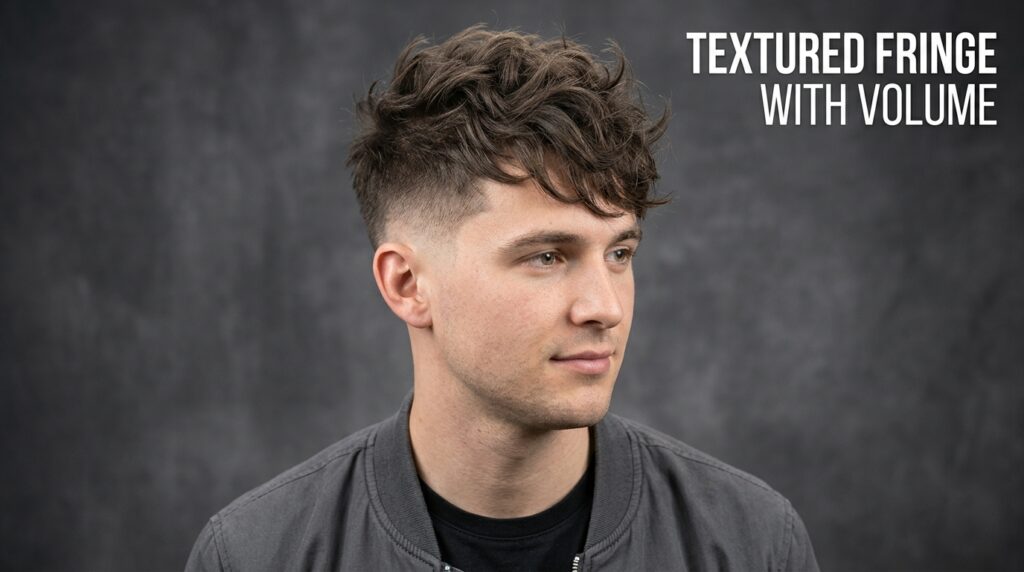
Here, the top is cut slightly longer and styled up and forward. The front gets lifted at the root. This makes the fringe stand out instead of lying flat on the forehead.
Volume adds length to the face. That is a plus for round faces. You need a blow dryer and a light-hold product to keep it in place. Sea salt spray also helps a lot.
Best for: round faces, fine hair that needs body, men who like a fuller shape.
4. Textured Fringe with Blowout
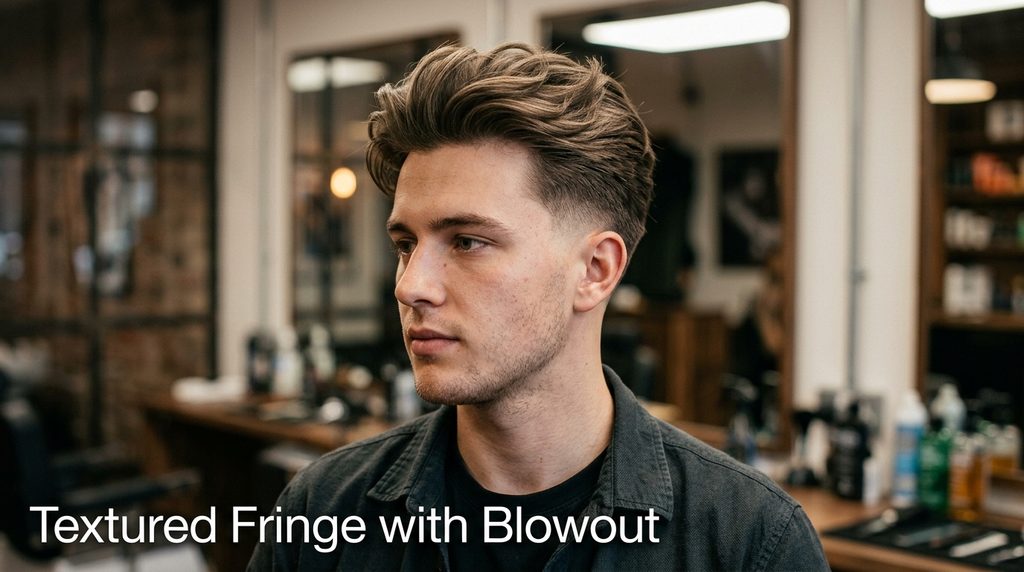
The blowout takes volume one step further. You dry the hair with a brush or your fingers, pushing it up and back or forward. Then you finish with a matte product. The result looks thick, soft, and full of movement.
This style has become very popular with younger men. It looks expensive, but it takes only five minutes once you learn the steps. The mid taper keeps the sides tight, so the blowout looks even bigger.
Best for: medium to thick hair, men who do not mind using a dryer, anyone who wants a modern look.
Wavy and Natural Texture Styles
These styles work with your natural hair pattern. You do less work and get more shape.
5. Wavy Textured Fringe
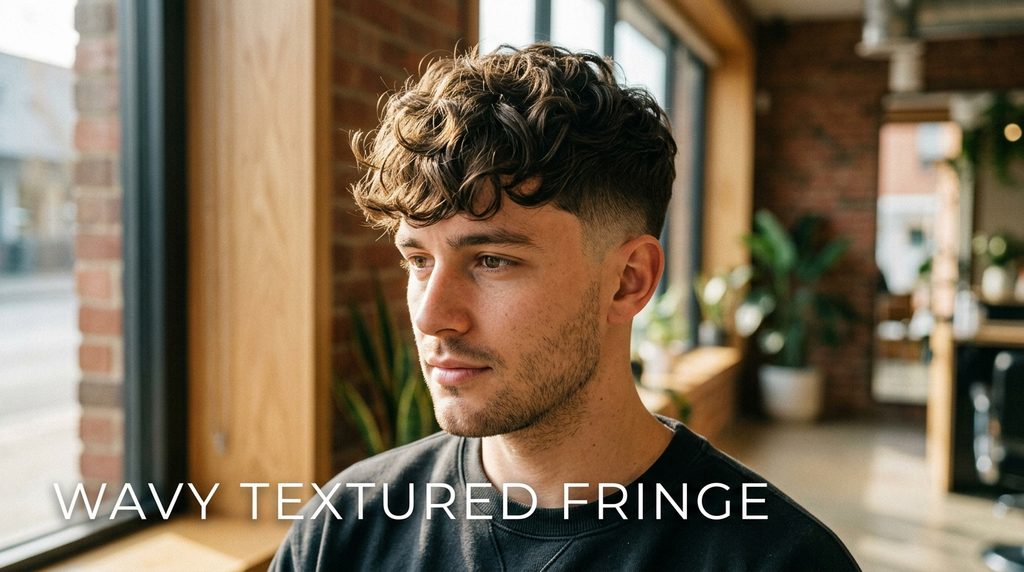
Wavy hair already has built-in texture. The barber only needs to shape it. The waves create a soft, flowing fringe that falls to the side or forward.
Keep the top a bit longer so the waves have room to move. Too short, and the wave can look like a frizzy mess. A light cream or mousse helps define each wave without making it stiff.
Best for: natural wavy hair, men who want a low-effort style, warm or humid climates.
6. Curly Textured Fringe
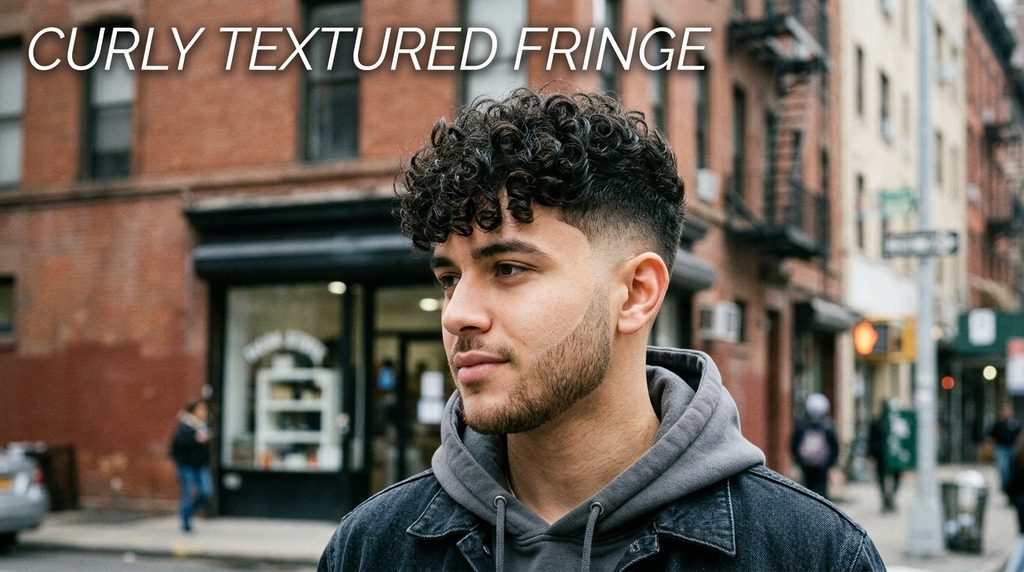
Curls give you the most natural texture of all. A curly fringe pairs well with a mid taper because the tight sides make the curls on top stand out. The contrast looks clean and deliberate.
The key is length. Curls shrink when they dry, so the barber should leave extra length on top. Use a curl cream and let the hair air dry or use a diffuser. Do not brush it when dry.
Best for: curly or coily hair, men who want their natural pattern to show.
Detail and Combination Styles
These two styles add a small twist to the base cut. They are great if you want something a little more personal.
7. Side-Swept Textured Fringe
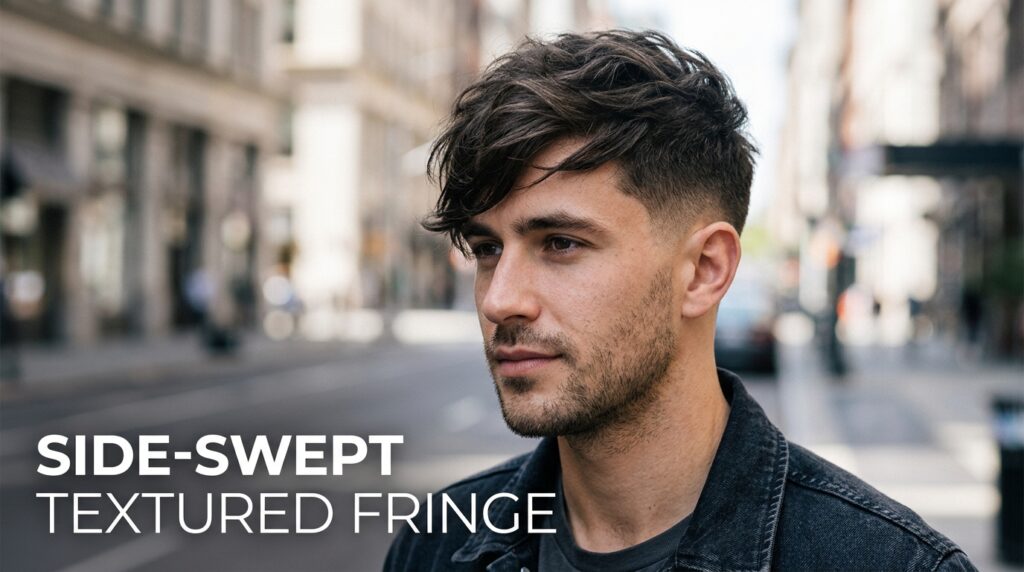
In this version, the fringe is combed or pushed to one side. It is still textured, but it has a clear direction. This gives the cut a more polished look.
It works well for office settings. It also suits men who find a full forehead fringe too heavy. A side part with a mid taper looks smart and modern.
Best for: professional settings, men with a higher forehead, those who want a neater finish.
8. Textured Fringe with Design
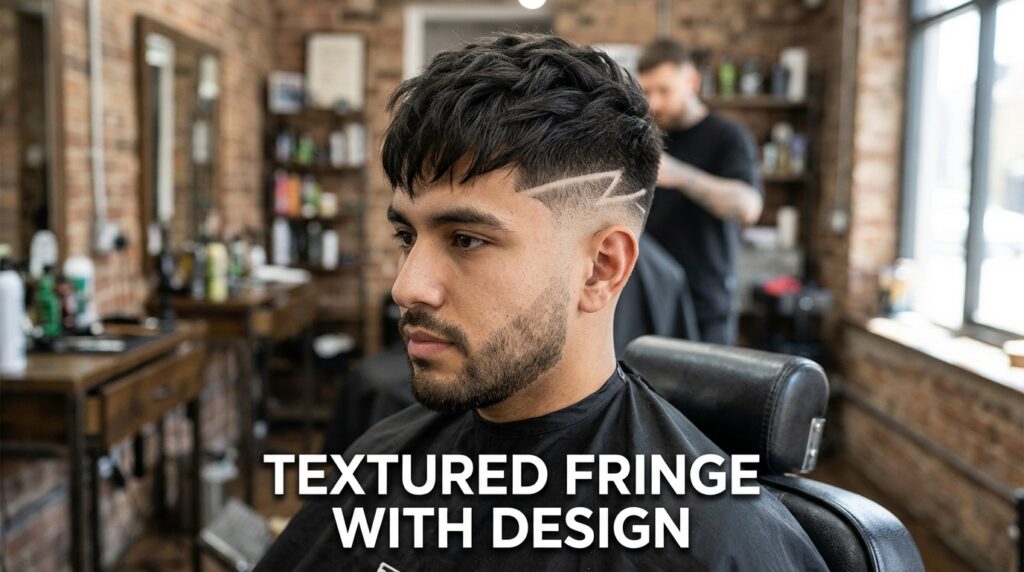
A design adds a bit of personality. The barber may carve a thin line, a small shape, or a pattern into the side of the fade. Some men get a sharp part line cut into the hair.
Keep it simple. A small detail goes a long way. Remember that designs grow out fast, so you will need regular touch-ups to keep it crisp.
Best for: men who like creative cuts, anyone with a barber they trust.
Quick Comparison of All 8 Styles
| Style | Top Length | Effort Level | Best Hair Type |
| Classic Textured Fringe | Medium | Low | Straight, wavy |
| Choppy Textured Fringe | Medium | Low | Fine, thin |
| Textured Fringe with Volume | Medium to long | Medium | Fine, straight |
| Textured Fringe with Blowout | Medium to long | Medium to high | Medium, thick |
| Wavy Textured Fringe | Medium to long | Low | Wavy |
| Curly Textured Fringe | Long | Medium | Curly, coily |
| Side-Swept Textured Fringe | Medium | Medium | Straight, wavy |
| Textured Fringe with Design | Medium | Medium | Most types |
Mid Taper Fade Textured Fringe Explained: What Makes the Texture Work
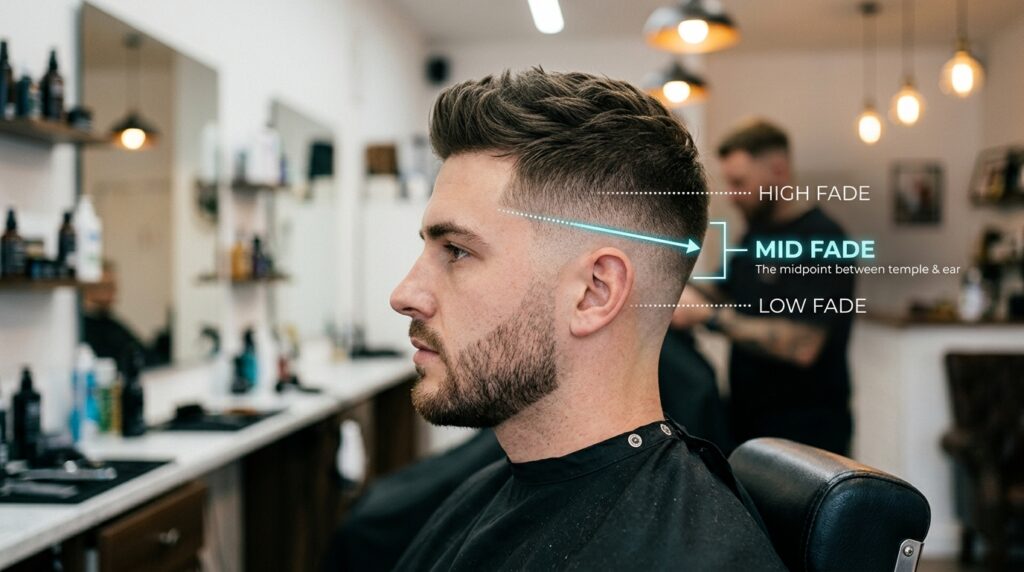
Texture is not an accident. It comes from how the top is cut. A good barber does not leave the hair at one flat length. Instead, they cut it in layers, and they use special tools to break up the ends.
Here are the main methods:
- Point cutting: The barber snips into the ends of the hair at an angle. This removes weight and creates soft, uneven tips.
- Razor cutting: A razor slides through the hair to make feathery ends. This works best on thick hair.
- Thinning shears: These remove bulk without changing the length.
- Slide cutting: The scissors glide down the hair shaft for a smooth, layered finish.
The fade on the sides helps too. When the sides are very short, the top looks fuller by comparison. This contrast is what makes the texture stand out.
Styling does the final job. A matte product gives grip and keeps the layers separate. Without a product, even the best cut can look flat. So the haircut and the product work as a team.
Why Textured Fringe Is Still Everywhere in 2026
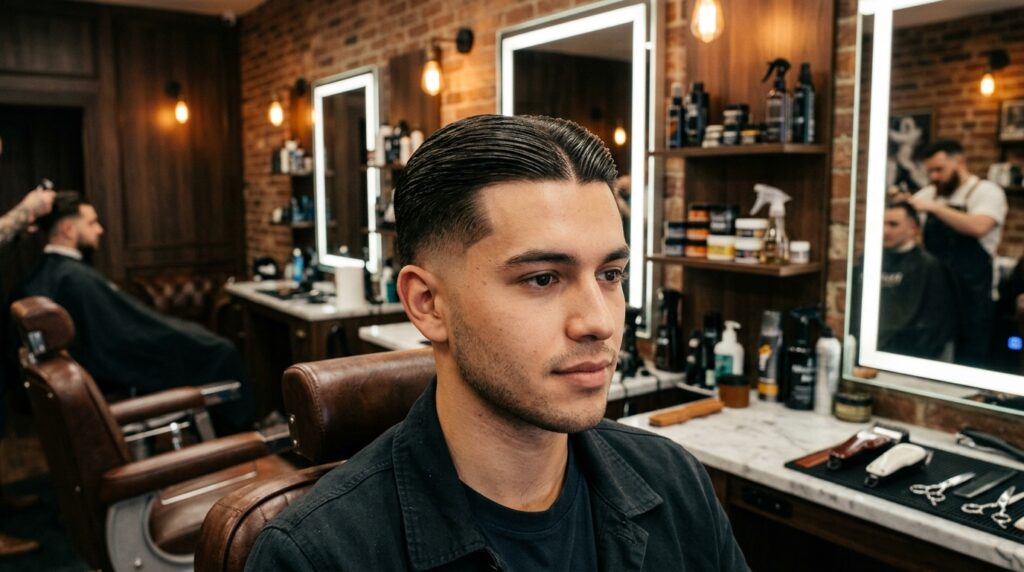
The textured fringe has stayed popular for a few clear reasons. First, it is flexible. You can wear it casually or dress up. Second, it suits many hair types and face shapes. Third, it looks good as it grows out.
Social media keeps pushing it too. Short videos show barbers cutting the style, and men copy what they see. Celebrities and athletes also wear versions of it, which keeps it in the public eye.
Another reason is comfort. Many men want a cut that looks stylish but not too try-hard. The messy, natural finish of a textured fringe fits that mood. It says you care, but you do not care too much.
Finally, it is easy to keep. You do not need ten products. One good clay and a few minutes are enough. That simplicity is a big part of its lasting appeal.
Pros and Cons: What You’re Signing Up For
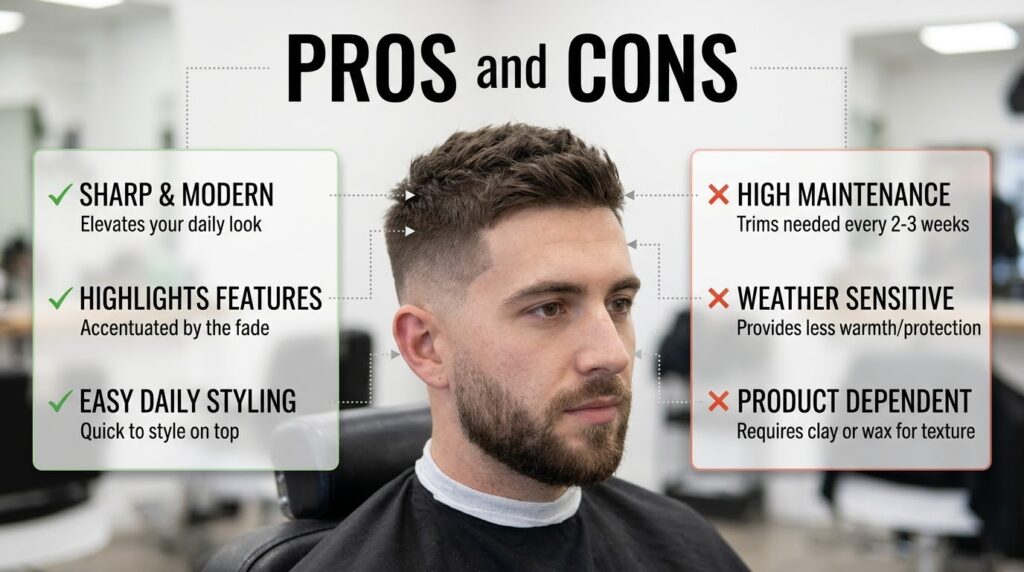
No haircut is perfect. Here is an honest look at both sides.
| Pros | Cons |
| Works with most hair types | Needs a trim every 3 to 4 weeks |
| Easy daily styling | Needs enough hair length on top |
| Looks good messy or neat | Sides lose their sharpness fast |
| Adds fullness to thin hair | Product is needed for best results |
| Suits many ages and face shapes | Not ideal for receding hairlines |
| Grows out gracefully | Can feel warm in summer with a long fringe |
If you hate styling, pick a lower-effort version like the classic or wavy fringe. If you love to experiment, the blowout or design versions will keep things fun.
One more point. The fringe does lie on the forehead. If you get oily skin or breakouts there, keep the hair clean and off the skin when you can.
Choosing by Hair Type: What Actually Holds Texture
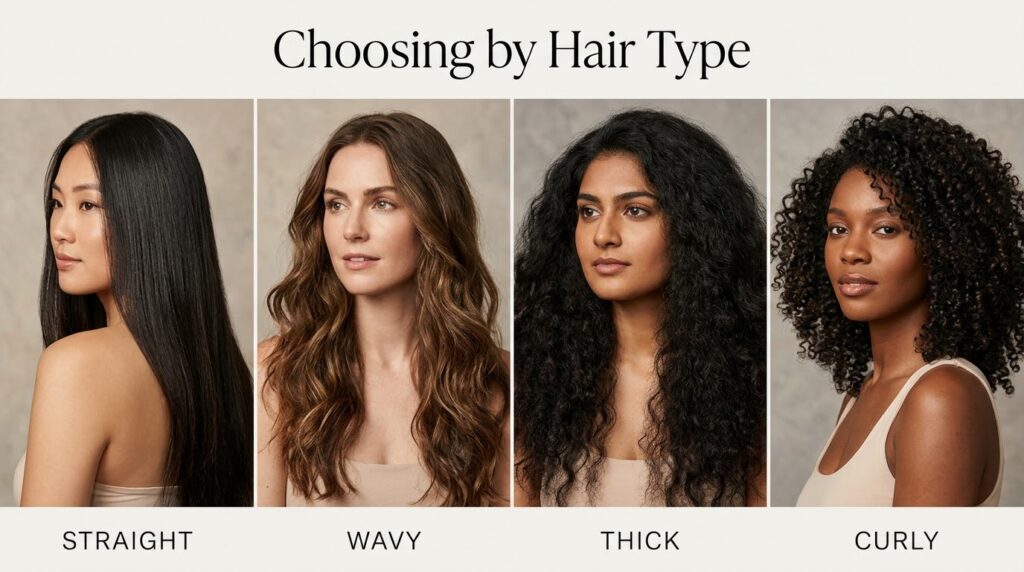
Your hair type decides how the cut will behave. Here is how to match the style to your strands.
Straight Hair

Straight hair is smooth and can fall flat. It needs layers and a good product to hold texture. Ask your barber for point cutting and a bit of razor work.
Use a clay or paste with a matte finish. Sea salt spray before styling adds grip. A blow dryer helps lift the roots.
Good picks: Classic Textured Fringe, Choppy Textured Fringe, Side-Swept Textured Fringe.
Wavy Hair

Wavy hair has natural movement. You want to work with it, not against it. Keep the top long enough for the waves to show.
Use a light cream or mousse. Scrunch the hair, then let it dry. Avoid heavy gels because they weigh the waves down.
Good picks: Wavy Textured Fringe, Textured Fringe with Blowout, Classic Textured Fringe.
Thick Hair
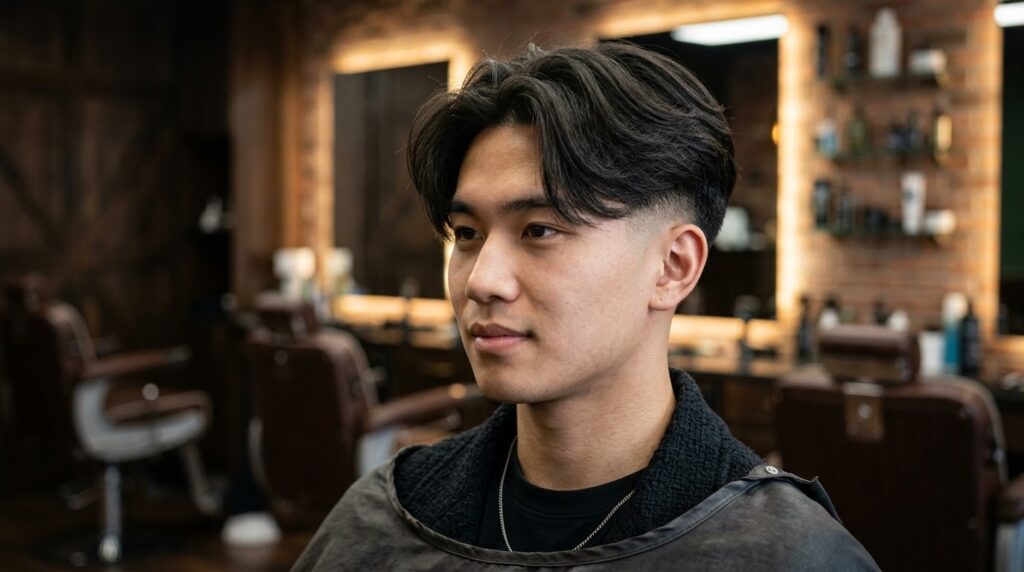
Thick hair can look heavy and boxy. The barber needs to remove weight inside the hair, not just on the outside. Thinning shears and razor cuts help a lot.
You will need a stronger product to hold the shape. A firm clay or a strong paste works well. Dry the hair fully before styling.
Good picks: Textured Fringe with Blowout, Textured Fringe with Volume, Side-Swept Textured Fringe.
Curly Hair

Curly hair needs moisture and length. The barber should cut it dry or damp to see how the curls fall. Leave extra length on top because curls spring up.
Use a curl cream and a diffuser. Do not brush dry curls. Finger-comb them instead.
Good picks: Curly Textured Fringe, Wavy Textured Fringe, Textured Fringe with Design.
Hair Type Cheat Sheet
| Hair Type | Key Need | Best Product | Top Length |
| Straight | Grip and lift | Matte clay, sea salt spray | 2 to 3 inches |
| Wavy | Definition | Cream, mousse | 3 to 4 inches |
| Thick | Weight removal | Firm clay | 3 to 4 inches |
| Curly | Moisture | Curl cream | 4 inches or more |
See More : Mid Taper Fade Buzz Cut: Best Styles 2026
Face Shape Matchups
The right fringe can balance your face. The wrong one can make features look off. Use these tips as a guide.
Oval Face
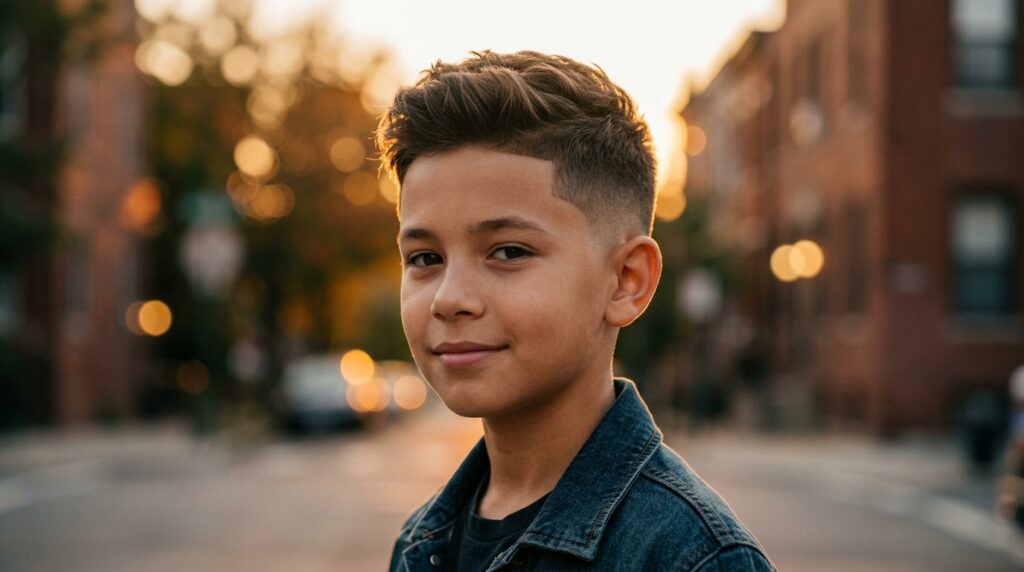
Oval faces are balanced. Almost any style works. You can try a side-swept fringe, a messy fringe, or a blowout. Enjoy the freedom.
Round Face
Round faces need height and sharp lines. Pick a fringe with volume on top. Keep the sides tight. A side-swept fringe adds an angle that slims the face.
Square Face
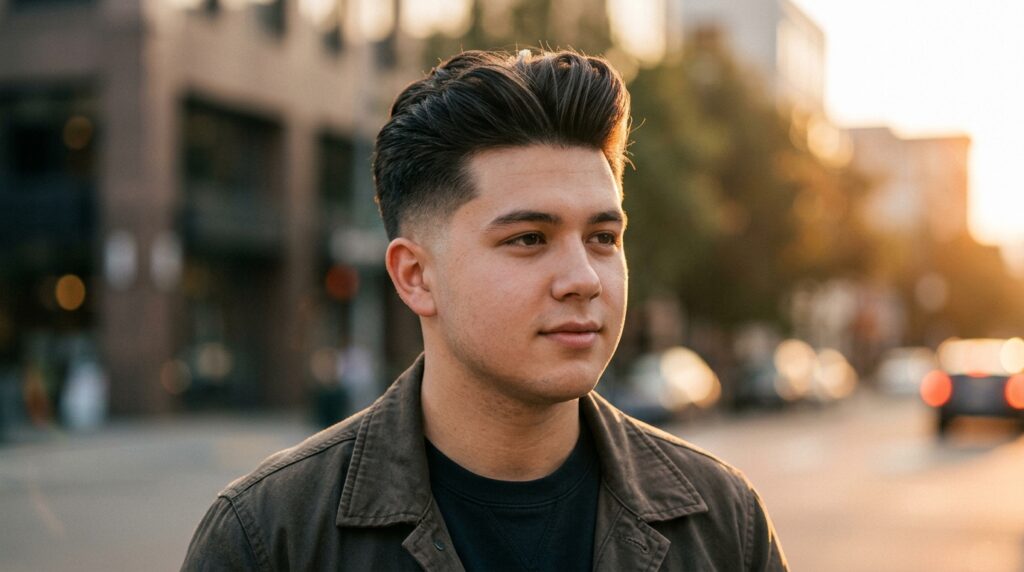
Square faces have strong jaws. A soft, choppy fringe softens the look. Avoid a very blunt line across the forehead. A bit of texture and a slight side sweep work well.
Heart-Shaped Face

Heart-shaped faces are wider at the forehead and narrow at the chin. A medium fringe that falls to the side balances this. Avoid too much volume on top.
Long Face

Long faces need less height. A fuller fringe that falls forward shortens the look of the face. Keep the top from getting too tall.
Diamond Face

Diamond faces have wide cheekbones. A textured fringe that sits across the forehead adds width up top. This balances the cheekbones. Keep the sides tidy.
Rectangular Face

Rectangular faces are long with a square jaw. A forward fringe cuts the length. A little volume on the sides of the top helps add width.
Face Shape Quick Guide
| Face Shape | Best Fringe Idea | What to Avoid |
| Oval | Almost anything | Nothing major |
| Round | Volume, side sweep | Flat, wide tops |
| Square | Choppy, soft | Blunt, harsh lines |
| Heart | Medium side fringe | Too much top volume |
| Long | Forward, fuller fringe | Very tall quiffs |
| Diamond | Forehead-covering fringe | Slicked-back styles |
| Rectangular | Forward fringe | Height on top |
Age Group Breakdown
A good cut can work at any age. Still, a few small changes help the style suit the stage of life.
Teenagers
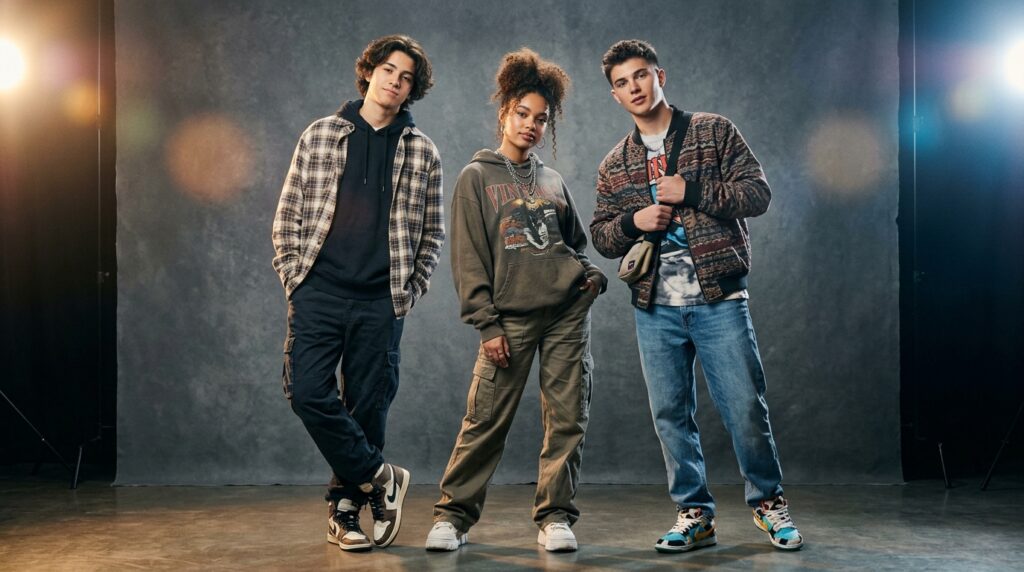
Teens usually want an easy, trendy look. The choppy fringe and the blowout are popular. Hair is often thick and healthy, so texture holds well.
Keep the sides a bit longer if school has rules. A mid taper is a safe middle ground. It looks neat but still modern.
Young Men
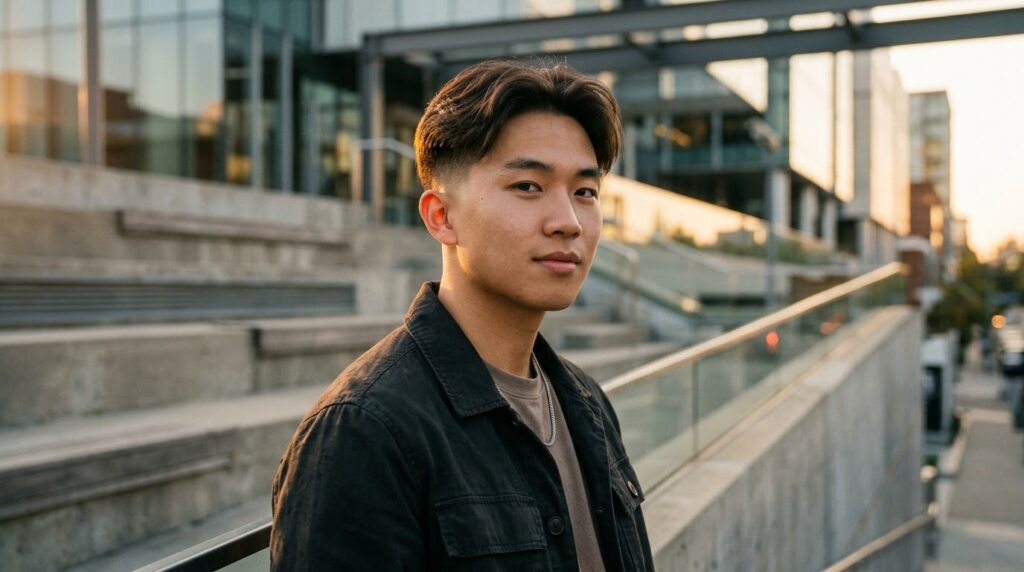
Men in their twenties and thirties can try the full range. The curly fringe, wavy fringe, and design styles all work. This is the age to experiment.
Pick a style that fits your job and your daily routine. If you are in a creative field, go bolder. If you are in a stricter field, try the side-swept version.
Professional Men

For work settings, a cleaner finish is best. A side-swept textured fringe or a classic version with a neat taper looks sharp. Keep the texture soft and the fringe shorter.
Use a light matte paste. Avoid anything too shiny. If you have thinning hair or grey hair, the texture helps hide it and adds fullness.
Age Group Summary
| Age Group | Best Style | Styling Tip |
| Teenagers | Choppy, Blowout | Keep it simple |
| Young Men | Wavy, Curly, Design | Try new looks |
| Professional Men | Side-Swept, Classic | Use light matte paste |
Talking to Your Barber: The Exact Guard Numbers
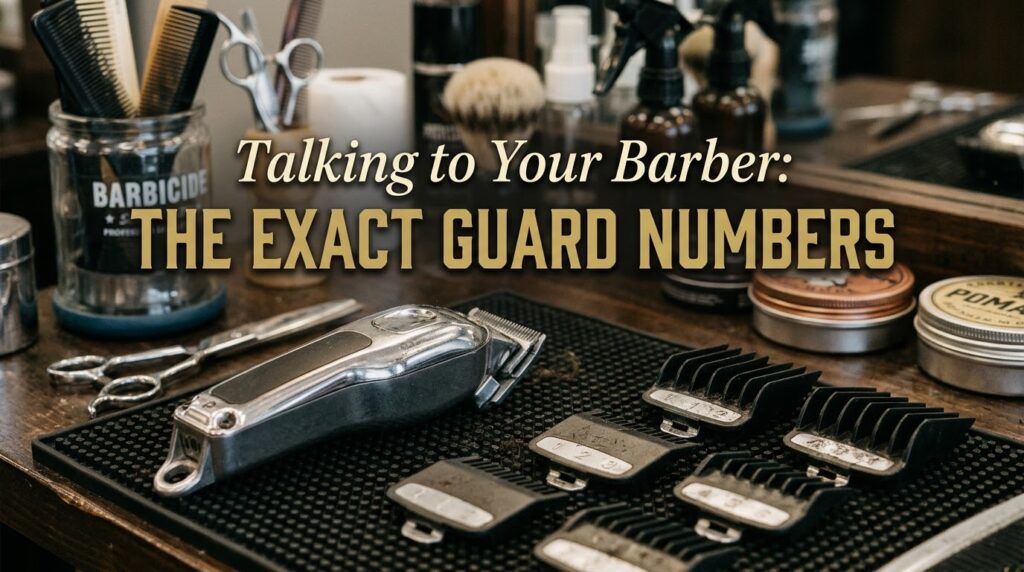
A great cut starts with clear words. Many men say, “Give me a mid fade with a fringe.” That is too vague. Instead, give exact details.
Here is a simple script you can use:
- “I want a mid taper fade.”
- “Start the fade at the temple, around the middle of the head.”
- “Use a number 1 at the bottom, blending up to a number 3 or 4.”
- “Leave 3 inches on top.”
- “Cut it textured with point cutting or a razor.”
- “Keep the fringe at about eyebrow length.”
Bring a photo too. A picture removes all guesswork. Show the front, side, and back if you can.
Also tell your barber about your hair type and how you style it. If you do not use a blow dryer, say so. The barber will cut the style to fit your habits.
Taper Fade Guard Sizes
Guard numbers tell the clipper how long to leave the hair. A smaller number means shorter hair. Here is a simple guide.
| Guard Number | Hair Length Left | Where It Is Used |
| Skin or bald (0) | Shortest | Very bottom of the fade |
| 0.5 | About 1.5 mm | Low part of the fade |
| 1 | About 3 mm | Lower sides, neckline |
| 2 | About 6 mm | Mid fade zone |
| 3 | About 10 mm | Upper fade zone |
| 4 | About 13 mm | Top of the taper blend |
A typical mid taper uses a 1 or 1.5 at the bottom. It blends up to a 3 or 4 near the temple. A tighter version uses a 0 at the bottom for extra contrast. A softer version stops at a 2 for a gentler look.
Video Guide: Watch the Texture Get Cut In

Seeing the cut in action helps a lot. Reading is useful, but a video shows the small moves that make the texture work. Search for short barber tutorials on video platforms. Use phrases like “mid taper textured fringe tutorial” or “textured fringe haircut.”
When you watch, pay attention to these things:
- How the barber blends the fade from short to longer hair.
- How the top is held between the fingers before cutting.
- Where the barber uses scissors and where they use a razor.
- How the finished cut is styled with product.
Take screenshots of the finished look. Show them to your barber at your next visit. This is the easiest way to get the exact result you want.
Common Mistakes That Flatten the Texture
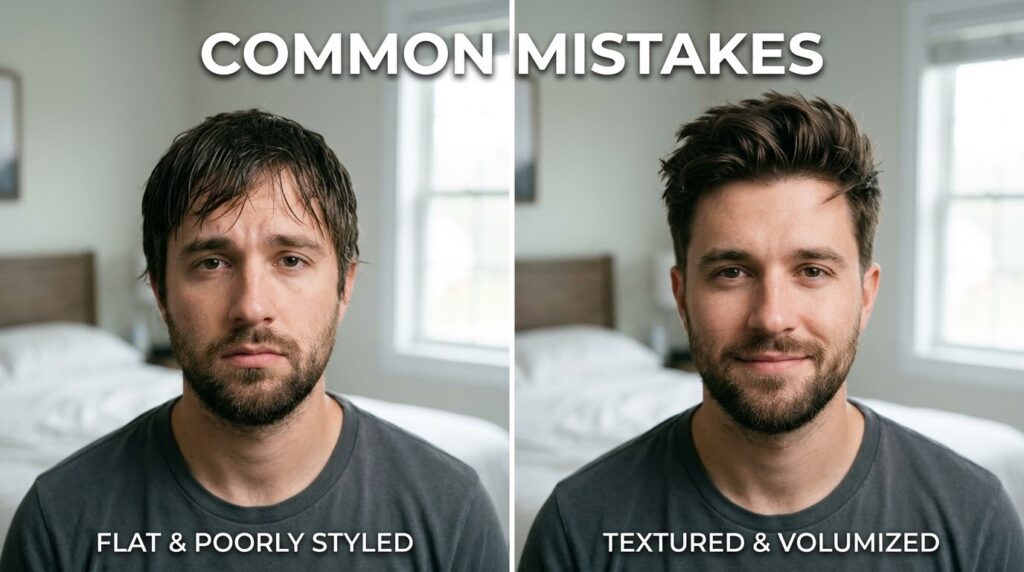
Even a good cut can fall flat. Most problems come from simple mistakes. Here are the big ones.
- Cutting the top too short. Texture needs length. Under 2 inches, the layers have no room to move.
- Skipping the layers. A blunt cut on top looks flat and heavy.
- Using the wrong product. Shiny gels and heavy waxes weigh the hair down. Choose a matte clay or paste.
- Using too much product. A pea-sized amount is often enough. Too much makes the hair greasy and stiff.
- Styling wet hair. The product does not grip wet hair well. Dry the hair first.
- Washing too often with harsh shampoo. This strips natural oils and leaves hair dry and frizzy.
- Waiting too long between cuts. The fade grows out and the shape is lost.
- Not telling the barber your routine. A cut that needs a dryer will fail if you never use one.
Fix these and your cut will look better every day.
Maintenance Reality Check

Every good haircut needs some care. The good news is that this one is not hard. Here is a clear picture of what to expect.
Daily Styling
Styling takes about three to five minutes. Follow these steps:
- Start with towel-dried or fully dry hair.
- Apply a light spray of sea salt or a pre-styler if you want extra grip.
- Blow dry the hair while pushing it forward or up.
- Rub a pea-sized amount of clay or paste between your palms.
- Run your fingers through the hair from back to front.
- Pinch and twist a few pieces at the front for definition.
That is all. Do not over-comb. The point is to look natural.
Products That Work Best
You do not need many products. Pick based on the look you want.
| Product | Finish | Best For |
| Matte clay | Matte, strong hold | Thick or straight hair |
| Texture paste | Matte, medium hold | Most hair types |
| Sea salt spray | Matte, light hold | Fine or wavy hair |
| Curl cream | Soft, natural | Curly hair |
| Styling powder | Matte, volume | Fine hair needing lift |
Washing Routine
Wash your hair two to four times a week. Daily washing can dry out the hair. Use a gentle shampoo. Add conditioner to the ends, especially if your hair is wavy or curly.
On non-wash days, rinse with water and restyle. If your scalp gets oily, a dry shampoo can help. Always rinse out product before bed so your pores stay clear.
Touch-Up Frequency
The fade is the part that grows out first. Plan a visit every three to four weeks to keep the sides sharp. If you wear a very tight fade, go every two to three weeks.
If you want to stretch the time, ask for a longer taper. Softer fades look better for longer. You can also book a quick clean-up of just the neckline and edges between full cuts.
Textured Fringe vs Other Fringe Styles
Fringes come in many forms. It helps to know how the textured version differs from others. Here is a quick look at three common ones.
Textured Fringe vs Blunt Fringe
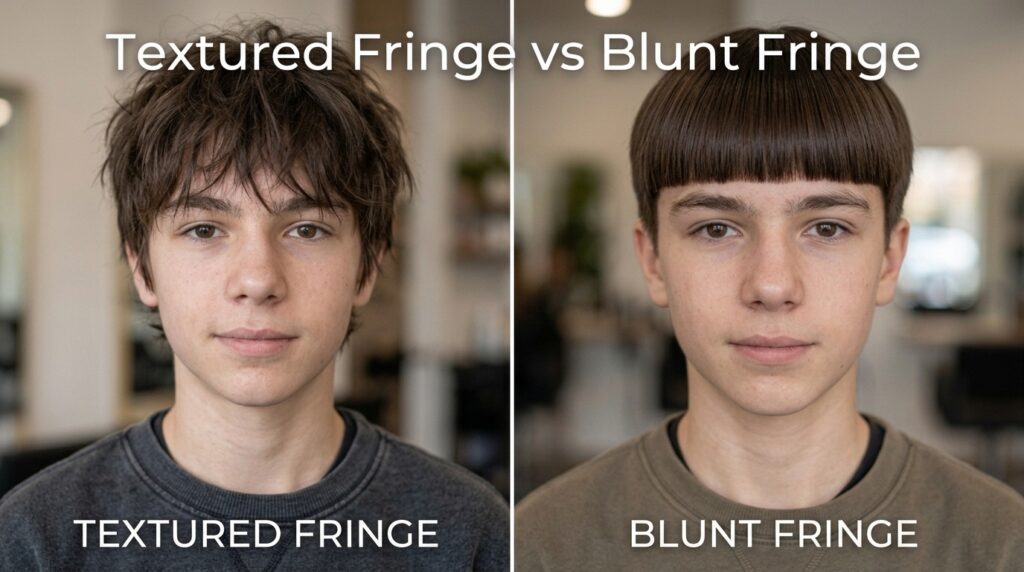
A blunt fringe is cut in one straight line across the forehead. It looks sharp and clean. It also looks heavy and less natural. A textured fringe has uneven ends and layers. It looks softer and more relaxed.
The blunt fringe needs very straight, thick hair. The textured version works for many more hair types. If you want an easy, forgiving style, choose the textured one.
Textured Fringe vs Edgar Cut
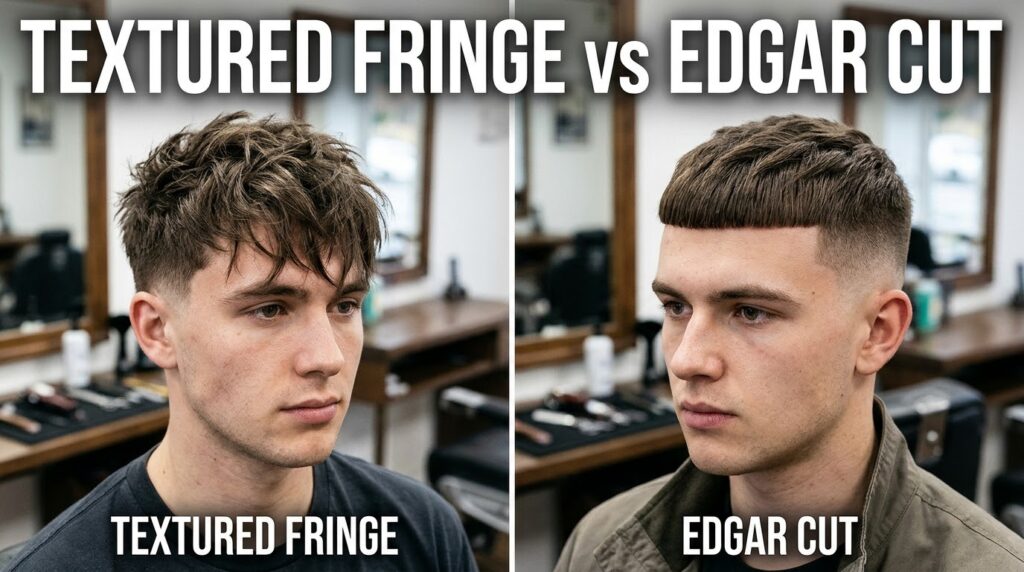
The Edgar cut has a short, blunt, straight fringe cut high on the forehead. It usually pairs with a very sharp fade. The look is bold and graphic.
The textured fringe is softer and longer. It has movement and does not have a harsh line. The Edgar cut makes a strong statement. The textured fringe fits more everyday looks.
Textured Fringe vs Curtain Fringe
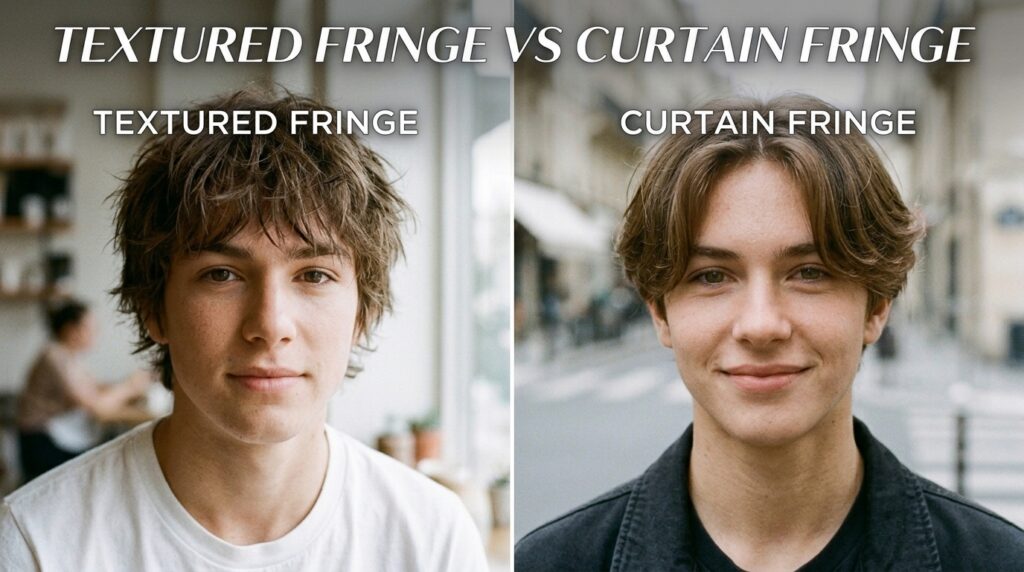
The curtain fringe parts in the middle and falls on both sides of the forehead. It has a retro, soft feel. It needs longer hair and often looks best on straight or wavy strands.
A textured fringe usually sits forward or sweeps to one side. It is shorter and easier to manage. The curtain fringe takes more length and patience to grow.
Fringe Style Comparison
| Style | Shape | Mood | Effort |
| Textured Fringe | Layered, uneven | Relaxed, modern | Low to medium |
| Blunt Fringe | Straight line | Sharp, bold | Medium |
| Edgar Cut | Short, blunt, high | Graphic, strong | Medium |
| Curtain Fringe | Center part, long | Retro, soft | Medium to high |
Men Haircut Fringe
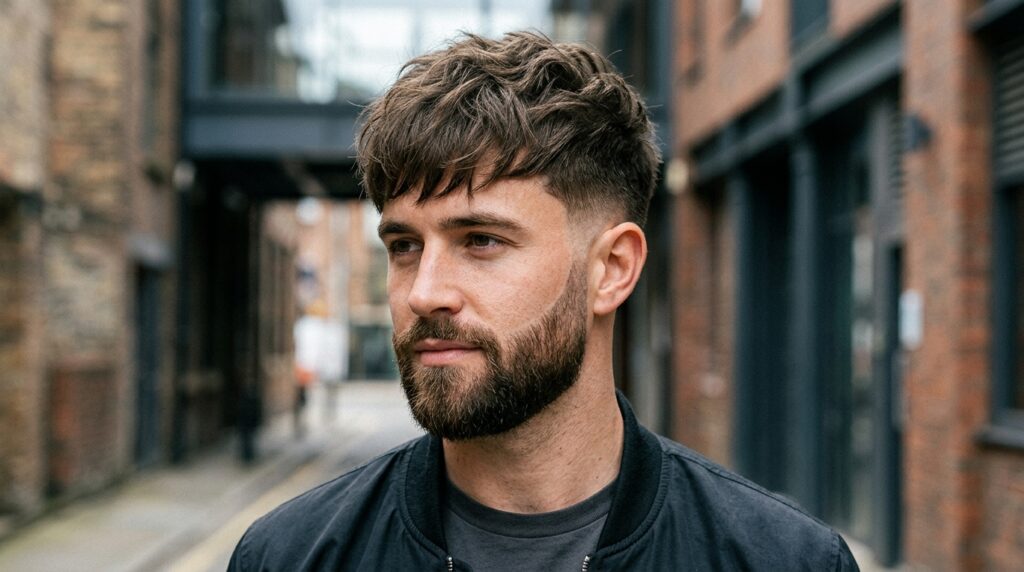
A men’s fringe haircut keeps the front hair long enough to fall onto the forehead. The sides and back stay shorter. This contrast is what gives the cut its shape. It is simple, and it suits many looks.
The fringe can be straight, textured, side-swept, or curly. A textured fringe is the most popular because it looks natural. It also needs less effort than a sharp, blunt line.
Fringe Taper Haircut
A fringe taper haircut adds a taper to the sides and back. The hair gets shorter in smooth steps, so there is no sharp line. This keeps the cut neat and easy to grow out.
A taper is softer than a skin fade. It works well for work and school. If you want a clean look without too much contrast, this is a safe pick.
Fringe w Taper
A fringe with a taper is the basic form of everything in this guide. The taper stays subtle. The top has enough length to fall forward. It is a good starting point if you are unsure what you want.
You can ask your barber for this cut and then adjust it over time. Add more texture, a blowout, or a design later.
Textured Blowout Fringe with Mid Taper
This look uses a blow dryer to add lift and softness. You dry the hair forward and up, then finish with a light matte product. The mid taper keeps the sides tight, so the top looks big and airy.
It works best on medium to thick hair. Fine hair can do it too with a bit of styling powder. It takes about five minutes each morning.
Mid Taper Fade Messy Fringe
A messy fringe is cut with many layers and styled with a rough finish. You do not comb it neatly. You tousle it with your fingers and let it fall as it likes.
This is the easiest look to wear every day. It hides small mistakes and looks good even on a bad hair day. Choppy cuts and a little clay are all you need.
Mid Taper Textured Top
A textured top means the hair on top has layers and movement. It does not need to be a fringe. You can push it up, back, or to the side. This makes it a flexible choice.
If you do not like hair on your forehead, this is a better fit. Ask for layers and keep the front a bit shorter.
Mid Taper Fade with Textured Top
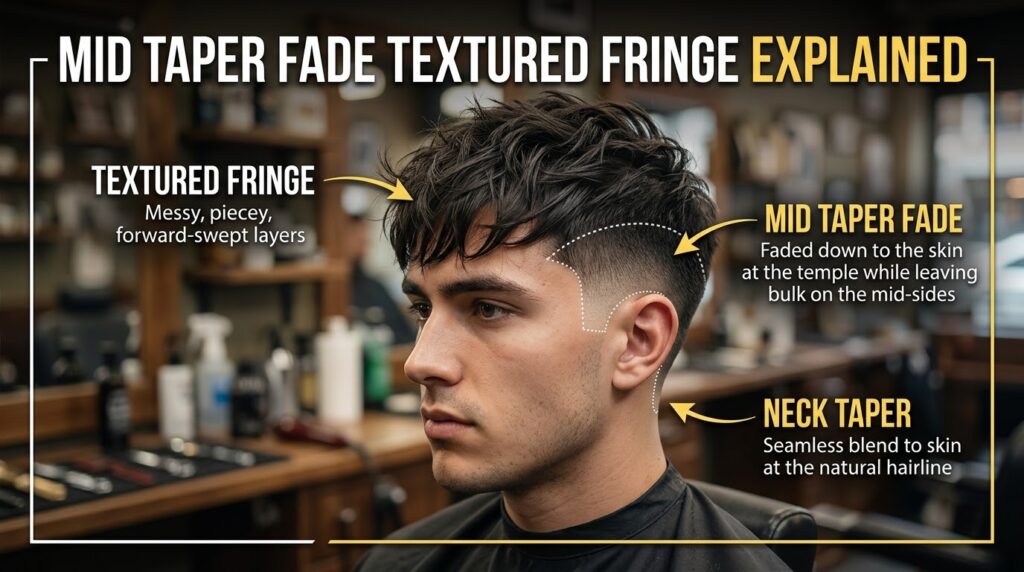
This is close to the textured top above. The focus is on the fade first and the texture second. It suits men who want a clean base with a relaxed top.
Pick a mid taper with a number 1 to 3 blend. Add a textured top of 2 to 3 inches. Style it with paste or clay for a soft, matte finish.
Mid Taper Textured Fade Styles for Men with Beard
A beard pairs well with a mid taper. Blend the sideburns into the beard for a smooth line. This makes the cut and the beard look like one clean shape.
A textured top balances a fuller beard. Keep the beard neat and trimmed so the whole look feels planned. Match the length of the fade to the length of the beard for the best result.
Mid Taper Textured Fade Styles for Men Short Hair
If your hair is short, you can still get texture. Leave about 2 inches on top and ask for choppy layers. Use a styling powder or paste to add grip.
Short hair also means less styling time. It is a good option for busy mornings and hot weather. You can let it grow a little longer when you want more options.
Mid Taper Textured Fade Styles for Men Straight Hair
Straight hair needs extra help to hold shape. Ask for a razor or point cutting. These tools break up the ends and add movement.
Use sea salt spray and matte clay. A blow dryer adds volume at the roots. Avoid heavy gels because they flatten straight hair fast.
Short Mid Taper Textured Fade Styles for Men
A short version keeps the top near 1.5 to 2 inches. It is low effort and very clean. It is a great choice for hot weather or an active lifestyle.
Ask for light layers so the top still has some movement. Use a small amount of paste. This look needs a trim every two to three weeks to stay sharp.
Frequently Asked Questions
What is a mid taper fade with a textured fringe?
It is a haircut with short, blended sides that start fading around the temple. The top is longer, layered, and falls forward in a soft, messy fringe.
How long should the hair be on top for a textured fringe?
Aim for about 2 to 4 inches. This gives enough length for layers and movement. Curly hair needs a bit more length because curls shrink.
What guard number is best for a mid taper fade?
Most barbers start at a number 1 and blend up to a 3 or 4. You can go to a 0 for a sharper look or stop at a 2 for a softer one.
How often should I get a mid taper fade trimmed?
Get a trim every three to four weeks. This keeps the fade sharp and the fringe in good shape. A tighter fade may need a visit every two to three weeks.
What is the best product for a textured fringe?
A matte clay or texture paste works best for most men. Use sea salt spray for fine hair and curl cream for curly hair.
Does a textured fringe work on thin or fine hair?
Yes, it does. Choppy layers add fullness and hide thin spots. Use a light powder or sea salt spray to build volume.
Which face shape suits a textured fringe the most?
Oval faces suit nearly every version. Still, round, square, and long faces can all look great with the right fringe. Choose volume or side sweep to balance your shape.
Final Thoughts
The mid taper fade with a textured fringe is a smart, lasting choice. It is clean on the sides and relaxed on top. It works for many hair types, face shapes, and ages. With the right cut and a few simple products, it looks good every day.
Start by picking the style that fits your hair and your routine. Give your barber clear words, including guard numbers and top length. Then keep up with regular trims and a basic styling habit. Small steps make a big difference.

George Parker is a content writer and the author behind Peak Faxhion, a blog focused on wishes, greetings, and messages for special occasions. George researches topics carefully and creates clear, useful, and reader friendly content to help people find meaningful words for birthdays, celebrations, festivals, anniversaries, and everyday moments.