

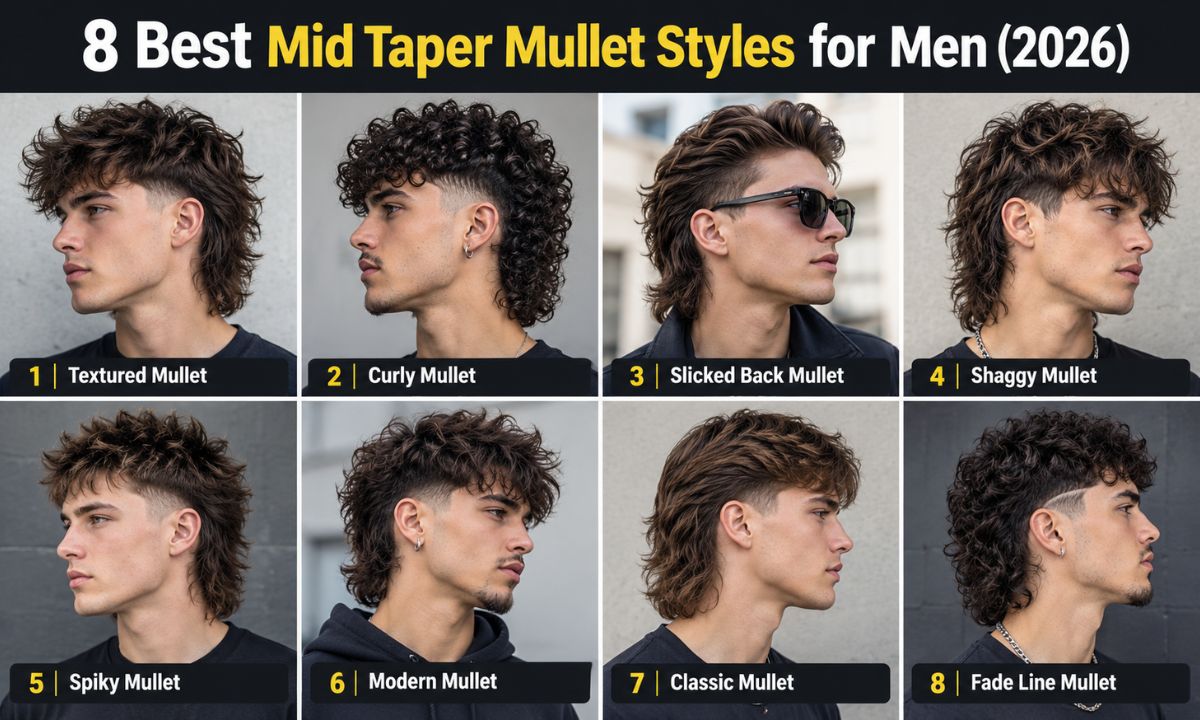
The mid taper mullet is one of the sharpest haircuts you can ask for this year. It keeps the sides clean and short. It lets the back grow long and loose. The result looks bold, but it still feels controlled.
This guide covers everything you need before you sit in the barber’s chair. You will see eight style options, tips for every hair type and face shape, exact guard numbers, common mistakes, and a simple care plan. Read it once and you can walk in with full confidence.
Mid Taper Fade Mullet Explained: What Makes This Combo Work
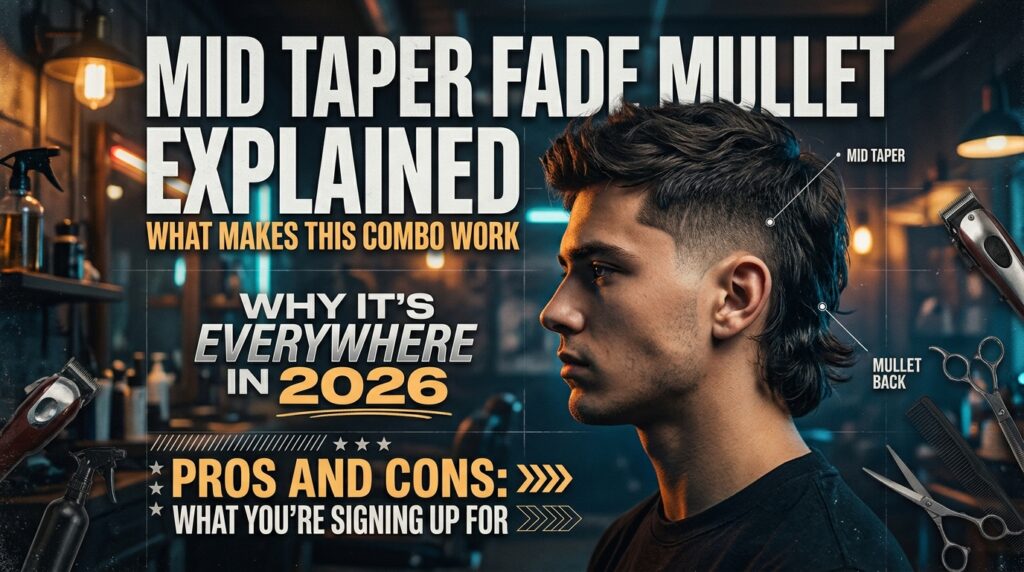
A mid taper fade mullet blends two ideas. The first is a mid taper on the sides and around the ears. The second is a mullet shape, which means the hair stays longer on top and at the back. The two parts work together because the taper gives the cut structure, while the length gives it attitude.
The taper starts around the middle of the head, near the temple line. The hair gets gradually shorter as it moves down to the neckline. It does not drop to skin as fast as a high fade. It also does not sit as low as a low fade. That middle position is why people like it. It feels balanced.
The mullet part adds movement. Longer hair at the nape can curl, wave, or lie flat. This contrast between tight sides and loose back is what gives the cut its look. Without the taper, a mullet can look messy. Without the length, a taper is just a regular fade.
Here is a quick view of how the parts fit together:
| Section | Typical Length | Role in the Cut |
| Sides | Short, tapered | Keeps the shape clean |
| Top | Medium to long | Adds volume and style |
| Back | Long | Creates the mullet effect |
| Neckline | Soft or blended | Joins the taper to the length |
Why It’s Everywhere in 2026
The mullet has returned in a new form. The old version was heavy and uneven. The 2026 version is cleaner, softer, and easier to wear. The mid taper is a big reason for that change.
Social media also plays a part. Short videos show before and after cuts in seconds, and the mid taper mullet looks great on camera. It has clear lines at the sides and a lot of texture at the back. People see it and want it.
Another reason is flexibility. You can wear it casual or sharp. You can grow it longer or keep it short. Many barbers also enjoy cutting it because it lets them show real skill.
- It suits many hair types.
- It works for different ages.
- It can be dressed up or down.
- It grows out in a way that still looks decent.
Pros and Cons: What You’re Signing Up For
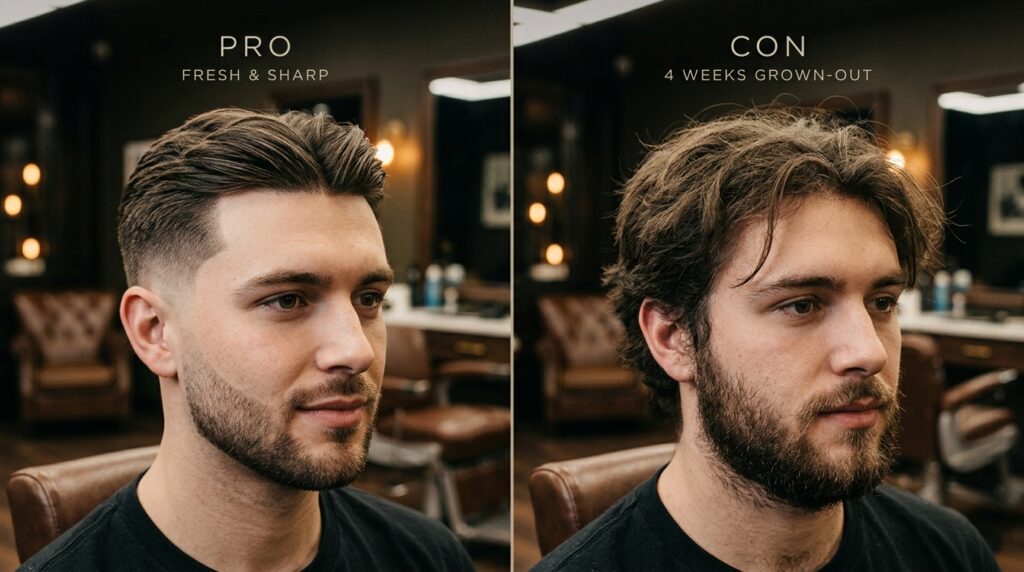
Every haircut has trade-offs. Knowing them first saves you from regret. The mid taper mullet gives you a lot, but it asks for some effort too.
The biggest plus is style. You get a cut that stands out without looking wild. The taper keeps things neat, and the length lets you play with texture. It is also forgiving as it grows, since the longer back hides small changes.
The main downside is upkeep. The taper loses its shape in two to three weeks. The back can get stringy if you ignore it. Some workplaces may also need a toned down version.
| Pros | Cons |
| Looks modern and bold | Needs regular trims on the sides |
| Works with many hair types | Back can look messy if not cared for |
| Easy to style with a few products | Not every barber knows how to blend it |
| Grows out well | May need a softer version for strict offices |
| Adds volume and shape | Takes time to grow the back |
8 Best Mid Taper Fade Mullet Styles
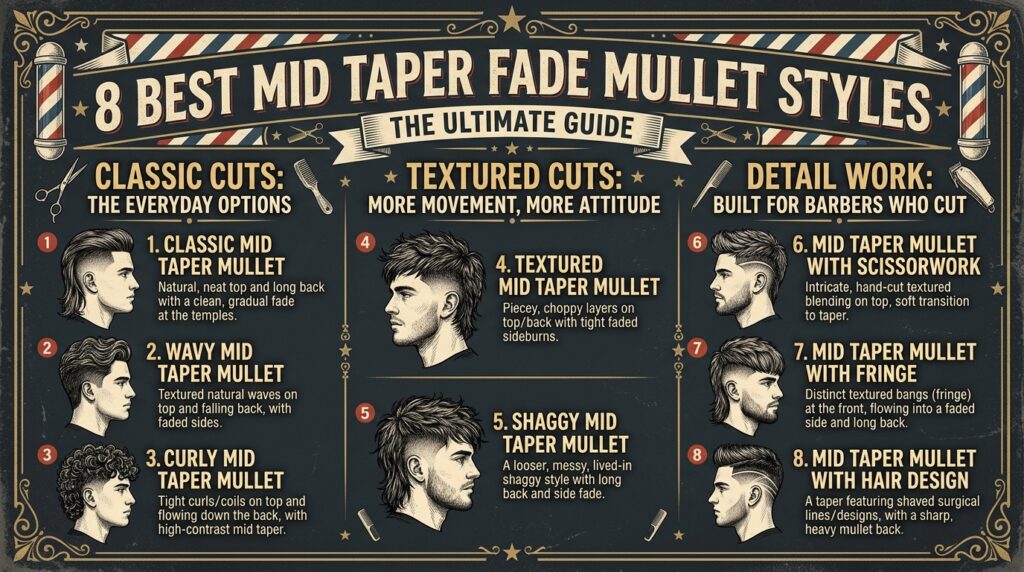
Below are eight styles grouped by type. Each one has a different feel, so you can pick the one that matches your hair, your job, and your taste.
Classic Cuts: The Everyday Options
These three cuts are the safest place to start. They are simple, clean, and easy to wear every day.
1. Classic Mid Taper Mullet
This is the base version. The sides taper from short to shorter. The top stays a medium length. The back grows long enough to touch the collar or a bit below.
It works well because it is balanced. Nothing is extreme. You can brush it back, push it to the side, or leave it natural. It is a good first mullet if you have never tried one.
Ask for a clean taper and a soft, connected back. The lengths should flow into each other without a hard break.
2. Wavy Mid Taper Mullet
Wavy hair gives the mullet a relaxed, easy feel. The waves add natural volume at the back. They also soften the contrast between the short sides and the long length.
The key is to let the waves do the work. Your barber should cut with the wave pattern in mind. Cutting wet hair can mislead them, since waves pull up as they dry.
Use a light cream or sea salt spray. This keeps the waves defined without making them stiff.
3. Curly Mid Taper Mullet
Curls and a mullet work very well together. The taper makes the curls on top and at the back stand out. The shape looks full, even, and intentional.
Curly hair needs more care. It dries out fast and can frizz. A moisturizing routine matters here. Your barber should also cut curls dry or slightly damp so the shape is accurate.
- Keep the top curls at a length that bounce nicely.
- Let the back curls grow into soft ringlets.
- Use a curl cream, not a heavy gel.
Textured Cuts: More Movement, More Attitude
If you like a rougher, more lived in look, these two options are for you. They focus on texture rather than clean lines.
4. Textured Mid Taper Mullet
This cut uses layers and choppy ends to add movement. The top and back are cut with a razor or point cutting. That removes weight and creates a piece-y finish.
It looks best on straight to slightly wavy hair. Fine hair also benefits, since the texture adds volume. Use a matte paste or clay to show off the layers.
Apply a small amount with dry hands. Work it through from the roots to the tips. Then shape the ends with your fingers.
5. Shaggy Mid Taper Mullet
The shaggy version is messy on purpose. It has more length on top, more layers, and a loose, uneven back. The mid taper keeps the sides tidy so the rest of the cut does not look careless.
This style fits people who want a relaxed look. It also hides cowlicks and uneven growth well. Because of the length, it needs a bit more washing and conditioning.
Expect to trim the sides every few weeks. The shag part can grow longer between visits.
Detail Work: Built for Barbers Who Cut
These styles need a skilled barber. The detailed work is what sets them apart.
6. Mid Taper Mullet with Scissorwork
Here the barber uses scissors instead of clippers on the top and back. This creates a soft, natural blend. There are no harsh lines, and the hair moves smoothly.
Scissorwork also gives more control over shape. The barber can remove bulk in exact spots. That leads to a cut that sits well on your head.
Pick a barber with real scissor experience. Look at their past work before you book. A good scissor cut costs more, but it often lasts longer and grows out better.
7. Mid Taper Mullet with Fringe
A fringe adds a short or medium front section that falls over the forehead. It frames the face and adds a youthful touch. Paired with the mid taper and long back, it creates a full, layered look.
The fringe can be straight, side swept, or textured. Straight fringes feel clean. Textured ones feel relaxed. Choose based on how much effort you want to put in each morning.
Note that a fringe works best on hair with good density at the front. If you have a receding hairline, talk to your barber first.
Business-Friendly Versions
Some jobs need a softer approach. You can still wear a mullet in these settings if you tone it down.
8. Business Mid Taper Mullet
This version keeps the length at the back shorter and neater. The top is styled back or to the side with a light product. The taper stays clean and subtle.
It reads as polished rather than rebellious. From the front, it looks like a neat taper. From behind, you see the extra length. That makes it a smart pick for offices, interviews, and formal events.
- Keep the back just above or at the collar.
- Use a light pomade for a tidy finish.
- Trim the neckline often for a crisp look.
Choosing by Hair Type: What Actually Holds the Shape
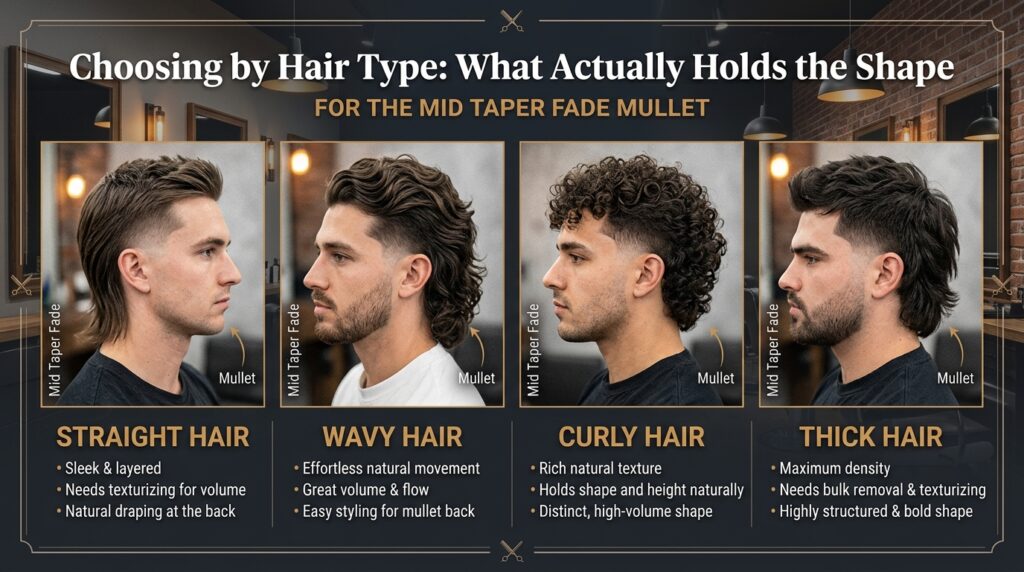
Your hair type affects how the mullet looks and behaves. A cut that works for one person can fall flat on another. Match the style to your natural texture and you will spend less time fighting it.
| Hair Type | Best Style | Main Tip |
| Straight | Textured or classic | Add texture with products |
| Wavy | Wavy mid taper | Let waves air dry |
| Curly | Curly mid taper | Moisturize often |
| Thick | Scissorwork or shaggy | Thin out weight |
Straight Hair
Straight hair shows the taper very clearly. The lines are sharp, and the blend looks smooth. The challenge is volume. Straight hair can fall flat at the back.
Ask for layers and texture to add to the body. A sea salt spray or light powder can lift the roots. Avoid heavy oils, since they make straight hair look limp.
The classic and textured styles work best here. They give shape without needing much effort.
Wavy Hair
Wavy hair is the easiest to work with. It has natural movement and a bit of body. The mullet length enhances the wave pattern.
Do not cut it too short at the top. Short waves can puff out and look uneven. Keep enough length so the waves can lay properly.
A light cream and a quick scrunch is often all you need. Let the hair dry on its own when you can.
Curly Hair
Curly hair gives the mullet a full, rich look. The taper cleans up the sides and shows off the curls above. It is a strong contrast and looks great.
The main rule is moisture. Dry curls turn into frizz. Use a leave-in conditioner and avoid brushing dry curls. A diffuser can help you dry them without breaking the pattern.
Plan for shrinkage too. Curls look shorter when dry. Ask your barber to leave a little extra length.
Thick Hair
Thick hair holds the shape well, but it can feel heavy. The back of a mullet may puff out and look boxy. This is where thinning and scissorwork help.
Your barber can remove weight from the inside. This lets the hair lay flatter while keeping its length. It also makes the cut easier to style.
- Ask for light thinning at the back.
- Use a lightweight product.
- Wash and condition well to keep it soft.
Face Shape Matchups
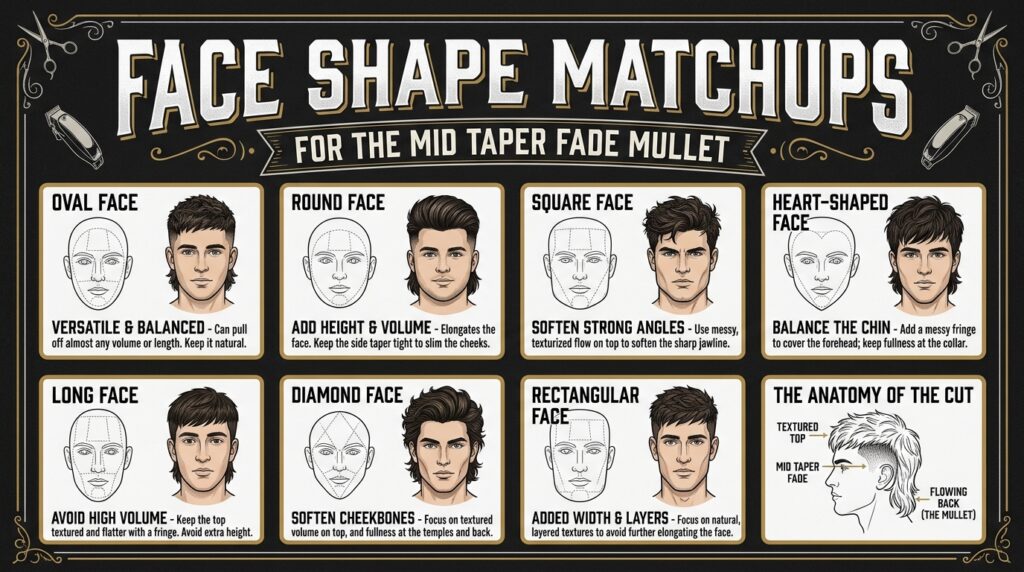
The right cut can balance your face. The mid taper mullet is flexible, so a few small tweaks go a long way. Use the guide below as a starting point.
| Face Shape | Best Tweak |
| Oval | Almost any version works |
| Round | Add height on top |
| Square | Soften with texture |
| Heart | Add fullness at the back |
| Long | Keep top shorter, add fringe |
| Diamond | Add volume at forehead |
| Rectangular | Use a fringe and keep sides full |
Oval Face
Oval faces suit nearly every style. The proportions are already balanced. You can try a classic cut, a shaggy version, or a business style.
Choose based on lifestyle rather than shape. Pick what you enjoy wearing. The taper will look good either way.
Round Face
A round face benefits from height and structure. Keep volume on top, and let the taper slim the sides. This adds length to the face.
Avoid too much fullness at the sides. A textured or classic cut with lift at the front works well.
Square Face
Square faces have strong jawlines. A softer cut can balance that. Textured and wavy styles add gentle movement.
Skip very sharp, boxy shapes. The goal is to soften the angles, not stress them.
Heart-Shaped Face
Heart-shaped faces are wider at the forehead and narrower at the chin. A fuller back adds balance near the jaw area. The mullet length does this well.
A side swept fringe can also soften a wide forehead. Keep the top light so the upper face does not look too heavy.
Long Face
Long faces need less height. Keep the top shorter and add width with texture. A fringe is a great option since it shortens the look of the forehead.
Avoid a tall quiff or very long layers on top. They add more length to the face.
Diamond Face
Diamond faces have high cheekbones and a narrower forehead and chin. Add volume at the forehead with a fringe or side swept top. This evens out the shape.
The mid taper keeps the cheekbone area clean. Pair it with a moderate length back for balance.
Rectangular Face
Rectangular faces are long with a strong jaw. A fringe helps shorten the look. Keep the sides slightly fuller than a skin fade would.
The mid taper is a good fit here, since it does not strip too much from the sides. Add texture on top for width.
See More : 17 Best Curly Mid Taper Fade Styles (2026)
Age Group Breakdown
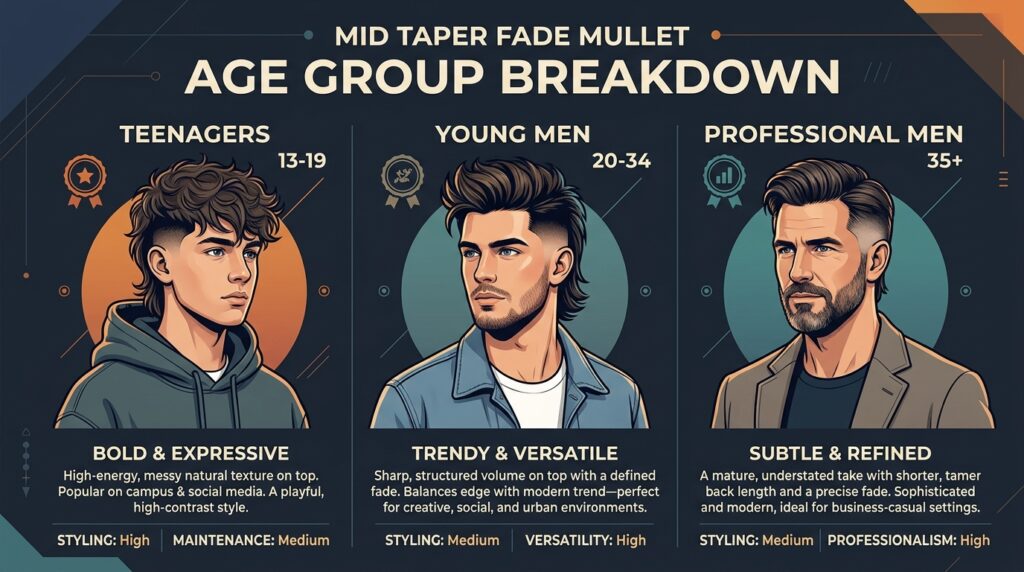
This haircut is not just for one age. Each group can wear it in a different way. The trick is to adjust length and styling to match your life.
Teenagers
Teens can go bold. School rules vary, so check them first. A shaggy or textured mullet fits well and looks fresh.
Keep the taper neat to avoid looking messy. Simple products are enough. A bit of texture spray or paste does the job.
Young Men
This group has the most freedom. College students and young workers can try any style on the list. Fringes, curls, and shaggy versions all fit.
Use the cut to show your style. Change it as you grow. Many young men start with a classic version and move to a bolder one later.
Professional Men
Professionals should lean toward cleaner choices. The business version is the best match. Keep the back tidy and the top styled.
You can still enjoy the mullet look without breaking workplace rules. A neat taper and a controlled length send the right message. Add a little polish with pomade.
| Age Group | Suggested Style | Styling Level |
| Teenagers | Shaggy or textured | Low effort |
| Young Men | Any style | Medium effort |
| Professional Men | Business or classic | Neat and polished |
Talking to Your Barber: The Exact Guard Numbers
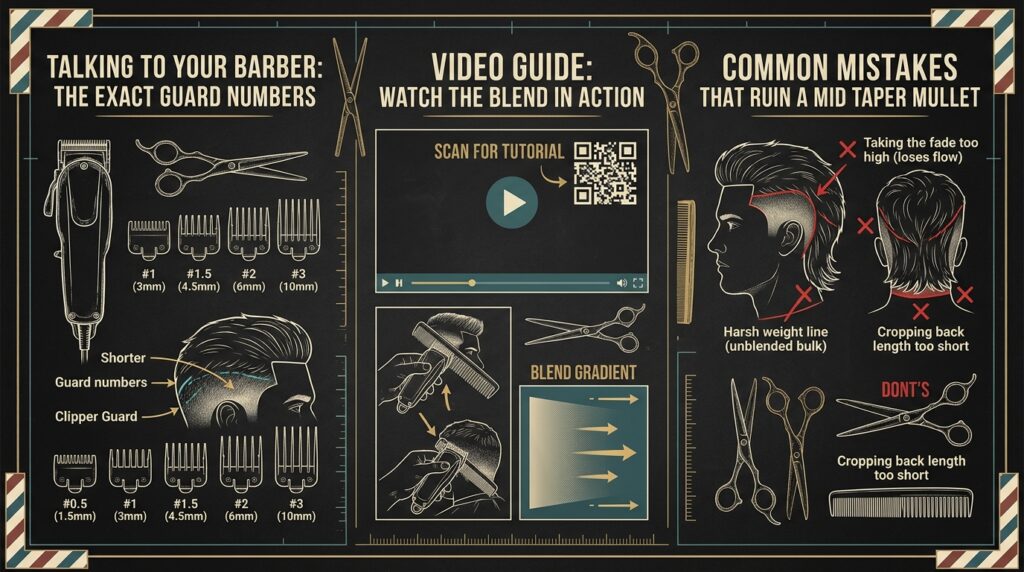
Clear instructions get better results. Guard numbers help your barber see exactly what you want. A photo helps too, but numbers remove guesswork.
A typical mid taper starts with a #1 or #2 guard near the lower sides and neckline. It blends up to a #3 or #4 near the midpoint. Above that, the hair stays long and is cut with scissors.
Here is a simple guide you can show your barber:
| Area | Typical Guard or Method |
| Lowest taper, near ear and neck | #0.5 to #1 |
| Mid section | #2 to #3 |
| Top of taper line | #4 |
| Top | Scissors, 3 to 5 inches |
| Back | Scissors, as long as you prefer |
Also say these things clearly:
- Where you want the taper to start (mid, around the temple).
- How long you want the back to be.
- Whether you want a hard or soft neckline.
- How much texture you like on top.
Bring one or two photos. Pick images that match your hair type. A picture of straight hair will not help if your hair is curly.
Video Guide: Watch the Blend in Action
Seeing a taper being cut can teach you more than reading about it. A good video shows how the barber moves the clippers, where the blend begins, and how the length connects.
When you search for a video, look for these things:
- A clear view of the side and back.
- The barber explained the guard numbers.
- Both the clipper work and the scissor work.
- Hair that looks like yours.
Watch the blending step closely. This is the part that makes or breaks the cut. Notice how the barber uses small, flicking motions to avoid lines. Then show the video to your own barber if you want to point to a specific look.
You can search for terms like “mid taper mullet tutorial” or “mullet taper blend” on video sites. Try to pick recent videos from 2025 and 2026, since styles and techniques change.
Common Mistakes That Ruin a Mid Taper Mullet
Most bad mullets come from a few simple errors. Avoid these and you will protect your cut.
The first mistake is a taper that sits too high or too low. A high taper looks too sharp. A low one loses the mid taper look. The taper should sit around the middle of the head.
The second is a harsh line between the taper and the long hair. The blend should be smooth. If you see a clear break, the cut will look unfinished.
The third is poor length planning. Some people cut the top and back too short and lose the mullet effect. Others leave it too long without shape, and it looks messy.
| Mistake | What Happens | Fix |
| Taper too high | Looks harsh | Keep it at mid level |
| No blend | Visible line | Ask for a soft blend |
| Wrong length | Loses mullet shape | Plan lengths first |
| Ignoring hair type | Hair will not sit well | Choose a matching style |
| Skipping trims | Taper grows out fast | Book regular visits |
| Heavy products | Hair looks greasy | Use light products |
Another common mistake is using the wrong product. Heavy gels and waxes can weigh the hair down. Stick with light creams, clays, or sprays.
Finally, do not skip communication. A short chat with your barber can prevent most problems.
Maintenance Reality Check
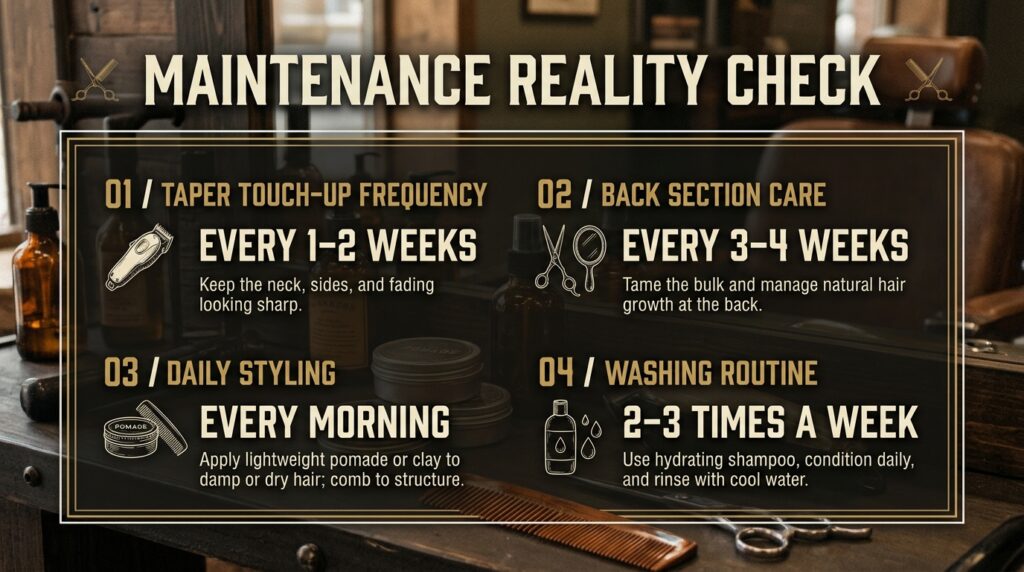
This cut looks great, but it needs a little care. The good news is that the routine is simple. A few habits keep it fresh.
Taper Touch-Up Frequency
The taper is the part that fades first. Short hair grows back and blurs the lines. Most men need a touch up every two to three weeks.
If you like a very sharp look, go every two weeks. If you are fine with a softer taper, three to four weeks is okay. Some barbers offer quick taper only visits at a lower price.
The longer sections can wait. You can go six to eight weeks before a full trim.
Back Section Care
The back is the star of a mullet. It also tangles and dries out easily. Treat it gently.
Trim the ends every two months to avoid split ends. Use a conditioner after washing. Comb through the back while the hair is damp, starting at the ends.
If the back gets thin or stringy, ask your barber to shape it. A small trim can bring back fullness.
Daily Styling
Daily styling should take under five minutes. The product depends on your hair type.
- Straight hair: Use a texture spray or light clay.
- Wavy hair: Use a cream or sea salt spray.
- Curly hair: Use a curl cream or leave in conditioner.
- Thick hair: Use a light oil or serum to control puffiness.
Start with damp hair. Apply a small amount of product. Shape it with your fingers. Use a blow dryer on low heat if you want more volume.
Washing Routine
Do not wash your hair every day. Washing too often strips natural oils. Two to four times a week is enough for most people.
Use a gentle shampoo and a good conditioner. Focus the shampoo on the scalp and the conditioner on the ends. Rinse with cool water to help seal the hair.
Curly hair may need even fewer washes. Dry hair needs a deep conditioner once a week.
Mullet vs Standard Mid Taper
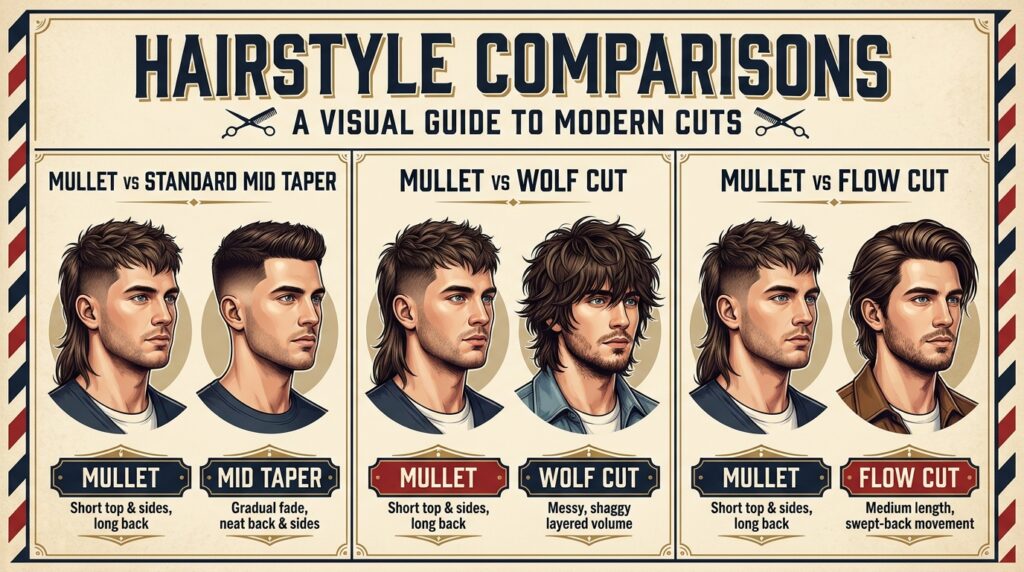
A standard mid taper is short all over. It has a clean taper on the sides and a short top. It is neat, simple, and low maintenance.
The mullet version adds length at the back and often on top. It has more personality and needs more styling. It also has a bolder look.
If you want a safe choice, go with the standard cut. If you want to stand out, pick the mullet. You can also start with a standard taper and grow the back over time.
| Feature | Standard Mid Taper | Mid Taper Mullet |
| Back length | Short | Long |
| Style level | Simple | Bold |
| Maintenance | Low | Medium |
| Best for | Everyday, formal | Casual, creative |
Mullet vs Wolf Cut
The wolf cut and the mullet look alike, but they are not the same. A wolf cut is heavily layered all over. It has a shaggy, wild shape, with volume at the crown and long layers at the back.
A mullet is more about contrast. It has short sides and a long back. The mid taper makes that contrast sharper.
The wolf cut is softer and rounder. The mullet taper is cleaner and more structured. Choose the wolf cut if you want a messy shape. Choose the taper mullet if you want a cleaner finish.
- Wolf cut: Layered, round, wild.
- Taper mullet: Contrast, clean sides, long back.
Mullet vs Flow Cut
The flow cut is a longer style where the hair sweeps back or to the side. It is usually the same length around the head with a smooth finish. It often has no sharp taper.
The mullet taper is shorter at the sides and longer at the back. It has more structure and a stronger look.
A flow cut suits people who want a laid back, smooth style. The mullet taper suits those who want contrast. You can also combine them by growing the top long and keeping a light taper.
| Feature | Flow Cut | Mid Taper Mullet |
| Sides | Same length or light taper | Clear taper |
| Back | Even with the rest | Longer than the sides |
| Look | Smooth and relaxed | Bold and sharp |
Mullet Mid Fade
A mullet mid-fade is a close cousin of the mid taper mullet. The difference is in the fade. A fade usually goes shorter, down to the skin, while a taper stays a little longer.
This option is good if you want a sharper contrast. The sides are very short, and the back is long. It looks edgy and clean.
Keep in mind that a fade grows out faster. You may need a touch up every two weeks. Ask your barber how low to take the fade and keep the blend smooth.
Mid Mullet Fade
The mid mullet fade focuses on a medium length mullet. The back is not too long. It usually sits near the collar. The fade begins in the middle of the head and drops to the neck.
This is a good middle ground. It has enough length to look like a mullet, but it is easy to manage. Many men choose this as their first mullet.
It also works well for work. You can style it back and look neat. Or you can leave it loose for a casual day.
Mid Fade Mullet
The mid fade mullet puts the fade first. Think of it as a mid fade with extra length at the back. The sides are clean and short. The top and back are left to grow.
This style suits people who already like fades. It gives you the fade look with a twist. You can wear it sleek or textured.
Pick a barber who is skilled at fades. The blend is key. A poor blend ruins the effect.
Short Mullet Low Fade
A short mullet low fade keeps everything tight. The fade starts low, near the ears and neck. The back is only a little longer than the sides.
It is the most subtle version on this list. It suits men who want the mullet idea without a big change. It also works well in formal settings.
Because the fade is low, the sides look fuller. This helps balance the face. It is also easy to maintain with a trim every three weeks.
Low Taper Mullet
A low taper mullet keeps the taper close to the ears and neckline. It is softer than a mid taper. The sides stay fuller and the change is gradual.
This style is good for thick or curly hair. It does not remove too much from the sides. It keeps a natural shape.
It also grows out gracefully. If you are unsure about a strong taper, try this one first.
| Feature | Low Taper | Mid Taper |
| Start point | Near ears and neck | Around temples |
| Look | Soft | Balanced |
| Growth | Slow to show | Faster to show |
Modern Mullet Low Fade
The modern mullet low fade blends a low fade with a refined mullet shape. The sides are tight at the bottom and blend up into soft length. The back is shaped, not messy.
This version feels current. It uses cleaner lines and lighter texture than the older mullet. It is a good fit for men who want a fresh look without extreme contrast.
Use a light product and keep the neckline neat. This helps the cut look intentional.
Mid Long Hair Mullet
The mid long hair mullet uses medium to long lengths throughout. The back may reach the shoulders. The top is long enough to push back or part.
It has a relaxed, creative feel. The taper is soft and subtle so the long hair is the main feature. It suits wavy and thick hair very well.
Keep the ends healthy with regular trims. Use conditioner to prevent dryness. Tie it up if you want a different look.
Mid Taper Fade Mullet
The mid taper fade mullet is the main cut this guide has covered. It combines a mid height taper with a fade like finish and a long back. It gives the cleanest contrast between short and long.
It works for many hair types and ages. You can dress it up or down. It also works with curls, waves, or straight hair.
To get it right, you need a good barber and a clear plan. Use the guard numbers listed earlier, and ask for a smooth blend.
Modern Mullet
The modern mullet is a lighter and cleaner version of the classic. It avoids the harsh, uneven look of the past. It uses layers, soft lines, and a more natural shape.
It is made to look polished. The sides are tidy. The back is shaped and balanced. It fits well with casual and smart outfits.
The modern mullet is also easy to adjust. You can keep it short or grow it longer. It adapts to your style as it changes.
8 Best Mid Taper Mullet Styles for Men 2026 Straight
Straight hair needs the right cut to avoid looking flat. The best straight hair options use texture and layers. Classic, textured, scissorwork, and business styles all work well.
Ask for point cutting to add movement. Use a light powder or texture spray for lift. Keep the back shaped so it does not hang heavy.
Straight hair also shows lines clearly. That makes the taper look very sharp. Make sure the barber blends it well.
| Style | Why It Works on Straight Hair |
| Classic | Clean and simple |
| Textured | Adds movement |
| Scissorwork | Soft blend |
| Business | Neat and sharp |
8 Best Mid Taper Mullet Styles for Men 2026 Short
If you prefer shorter hair, you can still wear a mullet. Keep the top and back at a moderate length. The back should sit near the collar.
Short versions work best with the classic, business, and low taper styles. They are easy to style and do not need much product.
The taper does most of the work here. Keep it clean and sharp. A short mullet can look very polished when done right.
- Keep the top two to three inches long.
- Let the back sit just at the collar.
- Trim the taper often.
- Use a light pomade or paste.
Frequently Asked Questions
What is a mid taper mullet?
A mid taper mullet is a haircut with short, tapered sides that start around the temples and a longer top and back. It mixes a clean look with a bold, relaxed shape.
How often should I get a mid taper mullet touched up?
Most men need a taper touch up every two to three weeks. The longer back can wait six to eight weeks between full trims.
What guard numbers are used for a mid taper mullet?
Barbers usually start with a #0.5 to #1 near the neck and ears. They blend up through #2 and #3 to a #4 at the top of the taper line.
Does a mid taper mullet work on curly hair?
Yes, it works very well on curly hair. The taper shows off the curls, and the long back forms soft, full ringlets.
Is a mid taper mullet professional enough for work?
Yes, if you choose a business version. Keep the back short, the taper clean, and the top neatly styled.
What is the difference between a mullet and a wolf cut?
A mullet has short sides and a long back. A wolf cut has heavy layers all over, with a rounder and shaggier shape.
How long does it take to grow a mid taper mullet?
Most men need three to six months to grow enough length at the back. The exact time depends on how fast your hair grows and the length you want.
Final Thoughts
The mid taper mullet is a strong, flexible haircut. It gives you clean sides, a long back, and plenty of room to show your style. You can pick a classic cut, a textured one, or a business friendly version. Each one can be adjusted for your hair type, face shape, and age.
The best results come from good planning. Know your hair, talk clearly with your barber, and care for your cut at home. Keep up with taper touch ups and protect the back with regular conditioning. With these habits, your mullet will look sharp all year.

George Parker is a content writer and the author behind Peak Faxhion, a blog focused on wishes, greetings, and messages for special occasions. George researches topics carefully and creates clear, useful, and reader friendly content to help people find meaningful words for birthdays, celebrations, festivals, anniversaries, and everyday moments.