

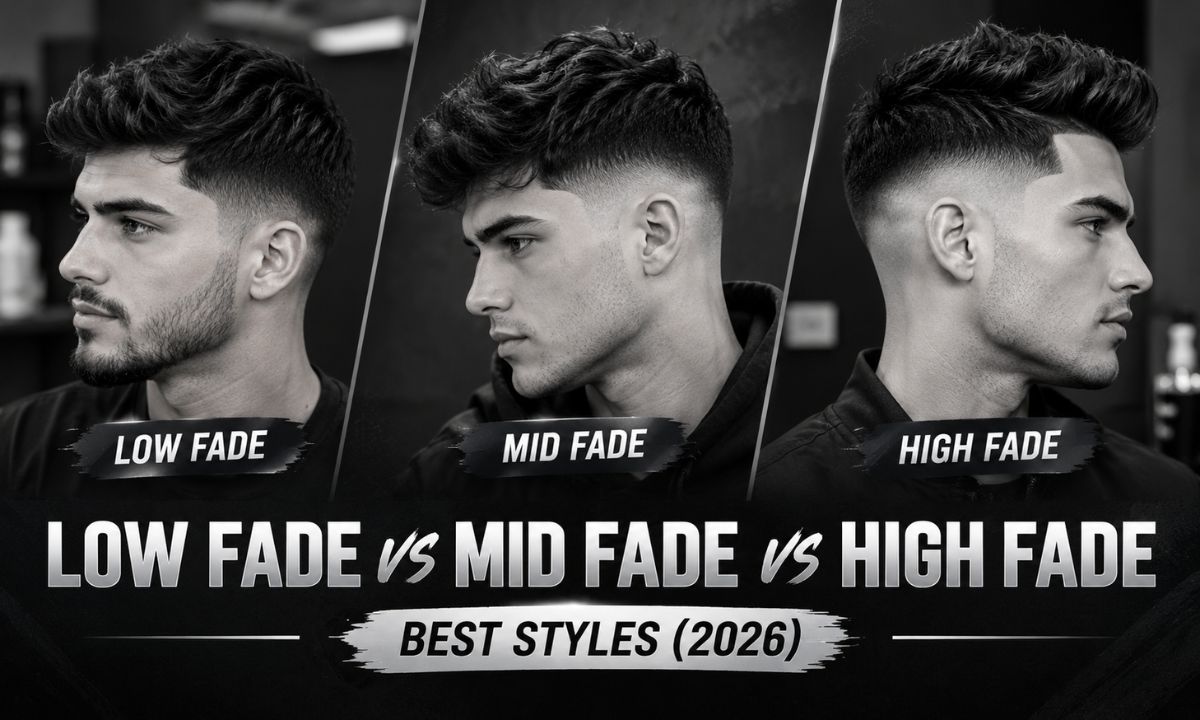
You sit down in the barber’s chair and hear the question: “Low, mid, or high?” If you freeze, you are not alone. Most men know they want to fade. Far fewer know which height fits them.
Here is the short version. The difference between a low fade, mid fade, and high fade is where the blend begins on the sides and back of your head. That one starting point changes how bold the cut looks, how fast it grows out, and how often you need to sit in the chair.
This guide breaks it all down in plain language. You will see side-by-side comparisons, face shape and hair type advice, 2026 style ideas, and a script to hand your barber. By the end, you will know exactly which fade to ask for.
Quick answer: Pick a low fade for a subtle, office-friendly look. Pick a mid fade if you want a balanced cut that works almost anywhere. Pick a high fade for maximum contrast and a bold, sharp finish.
What Is a Fade Haircut?
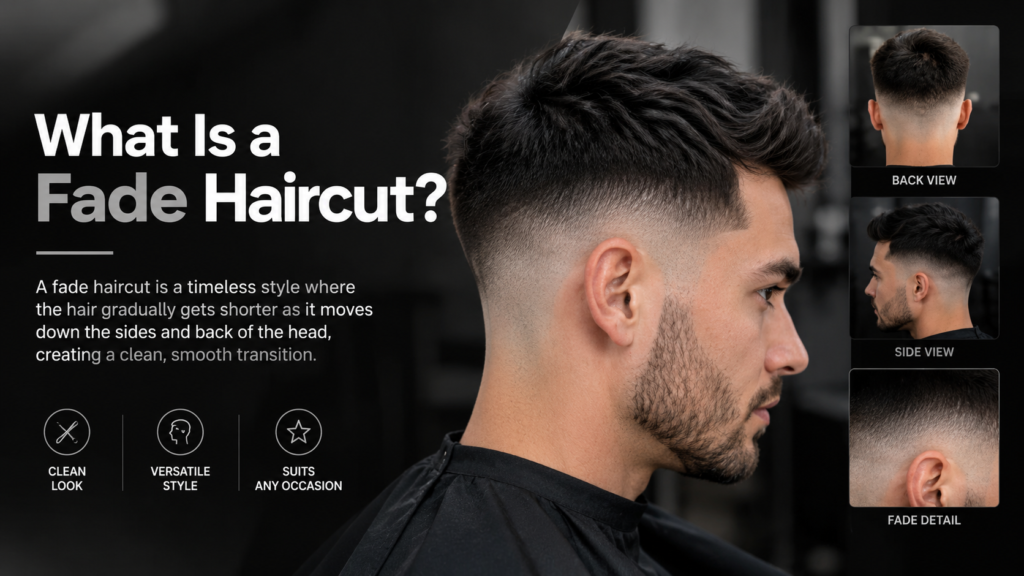
A fade is a haircut where the hair gets gradually shorter as it moves down the sides and back of the head. The longest hair sits on top. The shortest sits near the neckline and around the ears. In between, the length blends smoothly, with no visible line.
Barbers create this blend with clippers, guards, and a comb. The result looks like a soft gradient instead of a step.
Two things define any fade:
- Height – where the blend starts (low, mid, or high).
- Finish – how short the shortest section goes (taper, skin, or something in between).
Most confusion comes from mixing those two up. Keep them separate in your head, and the rest gets easy.
Low Fade vs Mid Fade vs High Fade: Side-by-Side Comparison
Use this table as your cheat sheet. Everything here is explained in more detail below.
| Feature | Low Fade | Mid Fade | High Fade |
| Where it starts | Just above the ear, near the natural hairline | Around the temples, roughly mid-side of the head | High on the sides, well above the temples |
| Contrast level | Subtle | Medium | Strong |
| Overall vibe | Clean, classic, understated | Balanced, versatile | Bold, sharp, modern |
| Best for | Offices, conservative settings, first-timers | Almost everyone, work and weekends | Fashion-forward looks, strong features |
| Grow-out | Slow and graceful | Moderate | Fast, shows regrowth quickly |
| Trim frequency | Every 3–5 weeks | Every 2–4 weeks | Every 1–3 weeks |
| Hair left on sides | Most | Medium | Least |
| Maintenance level | Low | Medium | High |
| Pairs well with | Side parts, textured crops, longer tops | Quiffs, pompadours, curls, crops | Tall tops, twists, afros, buzz cuts |
Think of it like a volume dial. Low is quiet. Mid is comfortable. High is loud.
What Is the Key Difference Between Low, Mid, and High Fade?
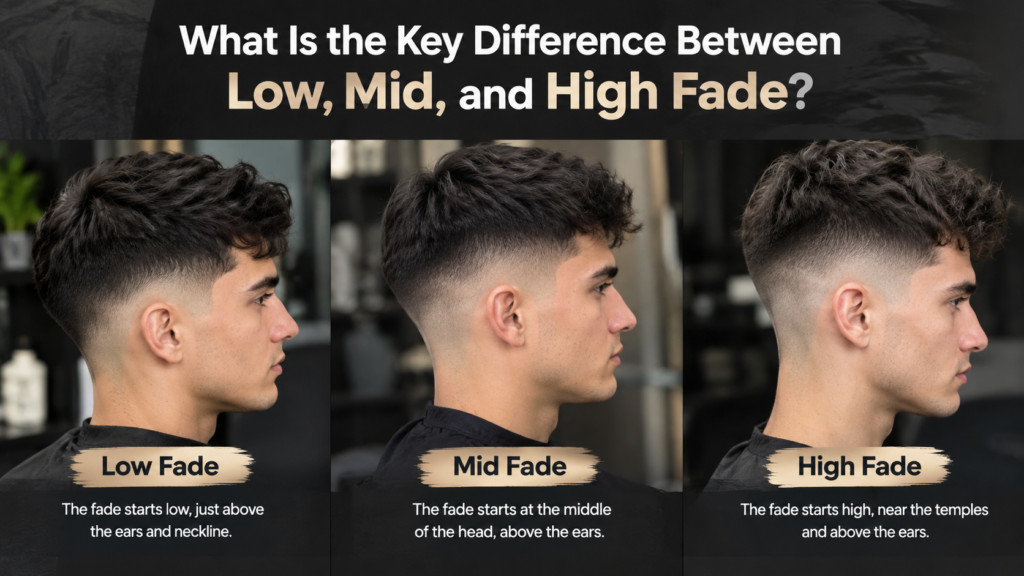
The key difference is placement. Picture a line drawn around your head, level with the top of your ears. Everything below that line is “low.” Everything near the temple is “mid.” Everything above the temple, heading toward the crown, is “high.”
That line is where the shortest hair ends and the blending begins.
- Low fade: The blend begins low, around the ear and nape. You keep more hair on the sides.
- Mid fade: The blend begins at the middle of the side profile. You see a clear gradient without losing too much length.
- High fade: The blend begins high up. The sides look very short, and the contrast with the top is dramatic.
Higher fades take away more hair. They also draw more attention to the top of the head. Lower fades keep things quiet and let the overall shape of your hair stay the star.
One more point worth knowing: heights are not exact measurements. A barber in one shop may call a cut “mid” that another calls “low.” That is why photos help so much when you explain what you want. We will cover that later.
Low Fade vs Mid Fade: What Is the Difference?
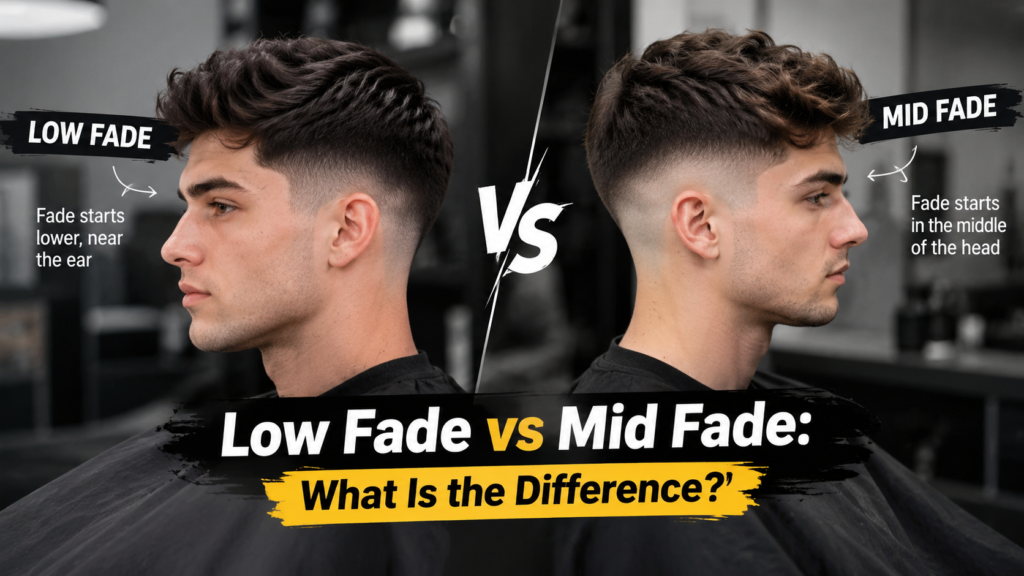
This is the most common matchup, and the gap between them is smaller than people expect.
Where Each One Starts
A low fade begins just above the ear and curves around the back, following the hairline. A mid fade begins higher, around the temple area, so the shorter section covers more of the side of your head.
How They Look
A low fade gives you a gentle shift. From across a room, many people will not notice you got a fade at all. They will just see a tidy cut.
A mid fade shows the gradient more clearly. The shape of the haircut becomes part of the style, not just a background detail.
Which Is Easier to Live With
Low fades grow out more gently. The shorter section is small, so new growth blends in with the rest. You can stretch a low fade a little longer between visits.
Mid fades start to look soft sooner. The larger blended area loses its crisp edge once regrowth shows up. Most people notice it around week three.
Read More: 30 Best Heart Face Shape Hairstyles for Men (2026)
Quick Verdict
| Choose a Low Fade If… | Choose a Mid Fade If… |
| You work in a conservative environment | You want a visible but not extreme fade |
| You are trying a fade for the first time | You like a clean, modern shape |
| You want to wait longer between cuts | You are fine with regular upkeep |
| You prefer a softer outline | You want your top style to stand out more |
If you are stuck between these two, many barbers will tell you to start with the mid fade. It is easy to go higher or lower on your next visit once you see how it sits.
Low Fade vs High Fade: What Is the Difference?
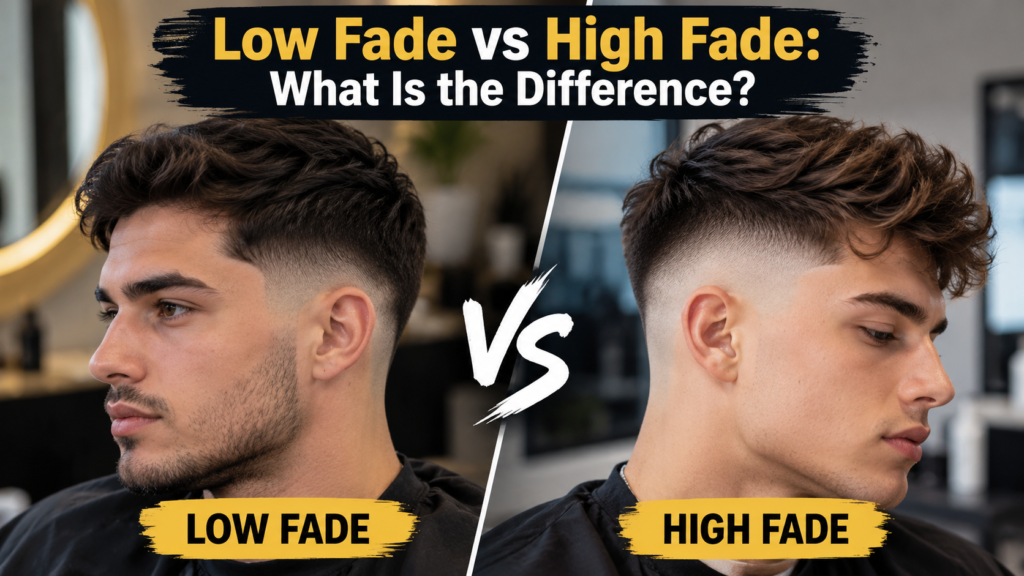
Now we are comparing opposite ends of the scale. This is where the personality difference shows up most.
Contrast
A low fade has quiet contrast. A high fade has a loud contrast. In a high fade, the skin or near-skin zone climbs well above the temple, so the top of your hair looks like it sits on a clean, tight base.
Attention
A high fade pulls the eye upward. It shows off the top hair, the hairline, and the shape of your head. A low fade pulls attention to nothing in particular, which is exactly why people like it for professional settings.
Practical Differences
- Head shape: A high fade reveals the full skull shape. A low fade hides small bumps or flat spots better.
- Sun and cold: The more skin you expose, the more the weather matters. High fades can feel chilly in winter and may need sunscreen in summer.
- Regrowth: A high fade shows regrowth fast, because the contrast is so stark. A low fade hides it longer.
- Styling pressure: High fades work best with deliberate styling on top. A low fade forgives a messy morning.
Quick Verdict
Go low if you want to look polished without trying. Go high if you want the haircut to make a statement and you are happy to book regular touch-ups.
High Fade vs Mid Fade: What Is the Difference?
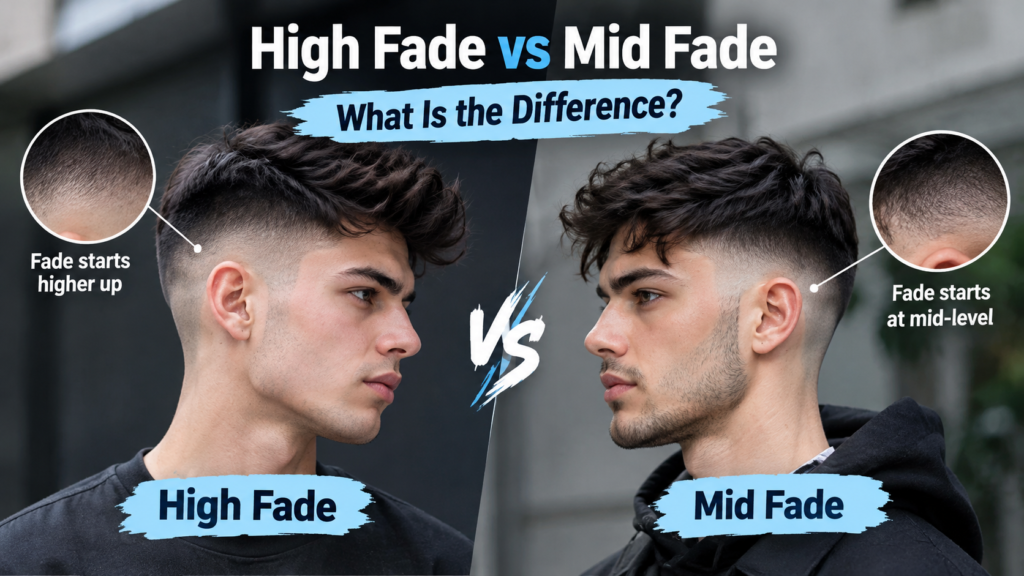
These two sit closer than they sound, but the gap matters.
A mid fade keeps the blend around the temple area. A high fade pushes it above the temple. That small shift changes the amount of exposed scalp and the overall energy of the cut.
Side-by-Side
| Mid Fade | High Fade | |
| Contrast | Moderate | High |
| Scalp showing | Some | A lot |
| Style flexibility | Very high | High, but needs strong top |
| Upkeep | Medium | Higher |
| Risk factor | Very low | Medium (needs a skilled barber) |
Which One Is More Forgiving?
Mid. Because less hair is removed, small differences in blending are harder to spot. A high fade leaves little room for error, so a clean, even blend matters more.
Which One Feels More Modern?
Both do. Right now, a mid fade is probably the “default” modern cut, while a high fade feels more deliberate and fashion-led. You will see high fades paired with long curls, twists, and tall textured tops, where the sharp sides make the top pop.
Skin Fade vs High Fade: What Is the Difference?
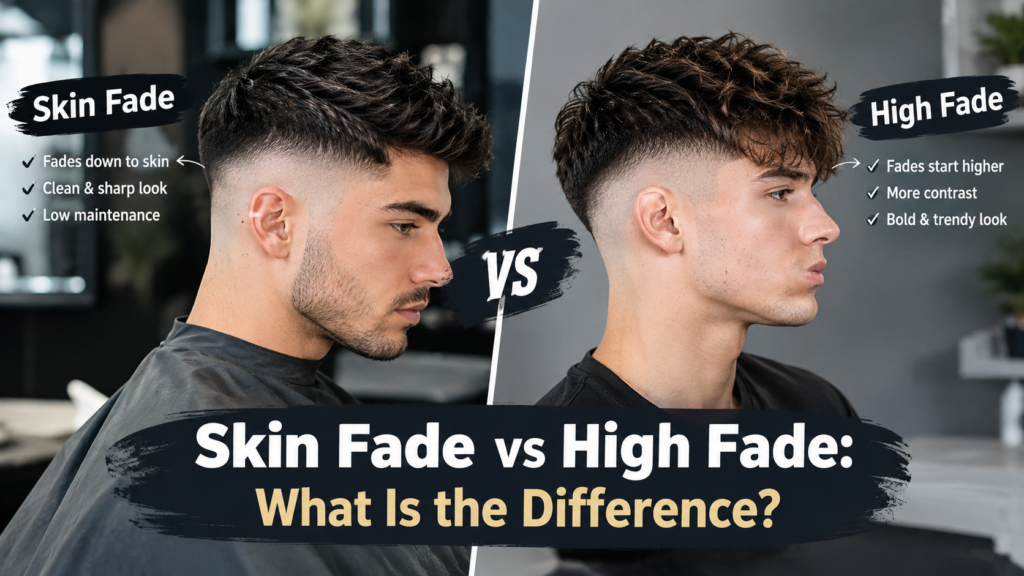
This one trips people up because the two terms describe different things.
- High fade describes the height (where the blend begins).
- Skin fade (also called a bald fade) describes the finish (the shortest part goes down to bare skin).
So a skin fade can be low, mid, or high. A high fade can be a skin fade, but it can also be a taper, which leaves a little hair at the bottom.
| Term | What It Describes | Examples |
| High fade | Height of the blend | High skin fade, high taper fade |
| Skin fade | How short the cut goes | Low skin fade, mid skin fade, high skin fade |
| Taper fade | A softer finish that keeps some length | Low taper, mid taper, high taper |
When you talk to your barber, give them both pieces: “mid skin fade” or “low taper fade.” That one phrase removes most of the guesswork.
A skin fade is the sharpest, highest-contrast finish. It also grows out the fastest and shows every millimetre of regrowth. A taper is gentler, more natural, and easier to maintain.
Which Fade Suits Your Face Shape?
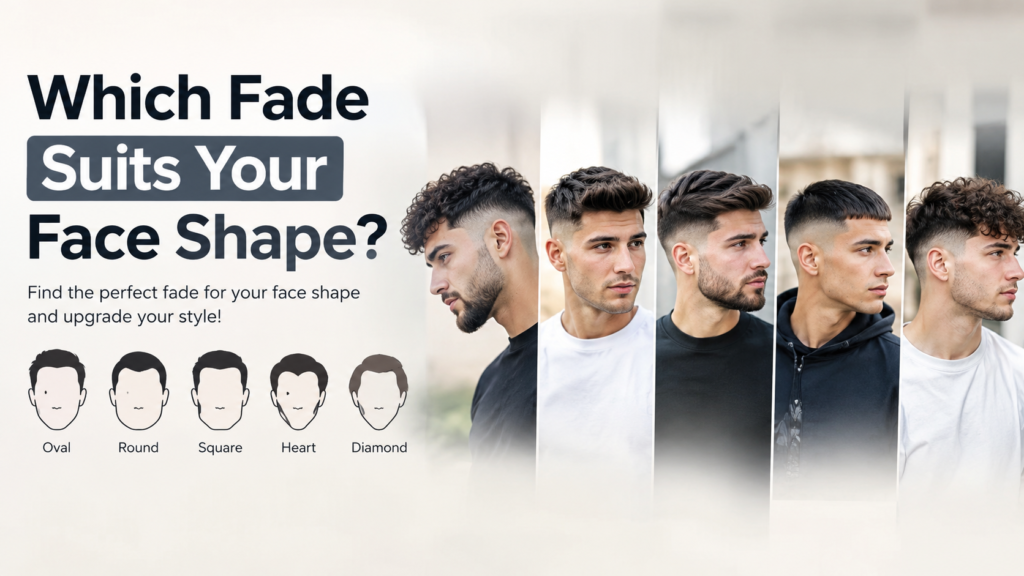
Face shape is a helpful guide, not a strict rule. Treat it as a starting point, then adjust based on your hairline, hair type, and style.
| Face Shape | Best Fade Heights | Why It Works |
| Oval | Low, mid, or high | The balanced proportions suit nearly everything |
| Round | Mid or high | Tight sides and extra height on top make the face look longer |
| Square | Low or mid | Softer blends take the edge off a strong jaw |
| Oblong / long | Low | Keeping some side length avoids stretching the face further |
| Heart | Mid | Balances a wider forehead and a narrower chin |
| Diamond | Low or mid | Keeps width at the cheekbones from looking exaggerated |
A Few Practical Notes
- Round faces: A high or mid fade with volume on top creates the illusion of height. Avoid cuts that add width on the sides.
- Long faces: A very high fade can make a face look even longer. A low fade with a bit of texture on top usually looks better.
- Square jaws: You already have strong lines. A low or mid fade softens the overall look without hiding the jaw.
If your face shape does not fit neatly into one category, you are normal. Most faces are a mix.
Which Fade Suits Your Hair Type?
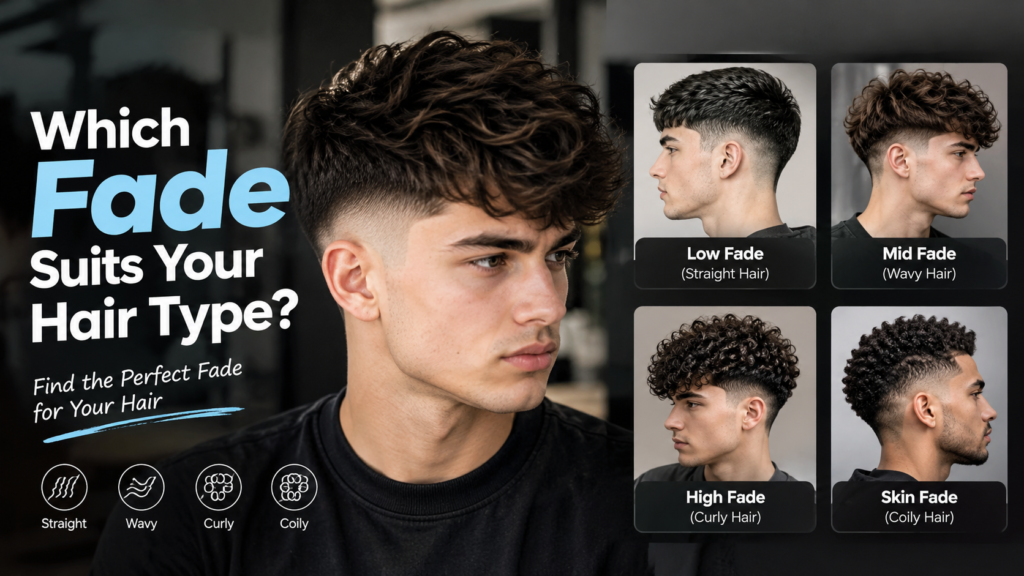
Hair type affects how a fade looks, how it grows, and how much work it takes to keep clean.
Fine or Thin Hair
A low or mid fade usually looks better. Very high fades can expose thin areas and make the top look sparse. Keeping some length on the sides gives the illusion of fuller hair.
Thick Hair
Thick hair holds a fade beautifully at any height. A mid or high fade also helps remove bulk from the sides, which keeps the shape tidy.
Wavy Hair
Wavy hair loves a mid fade. It leaves enough room on top for natural movement while keeping the sides sharp.
Coily or Afro-Textured Hair
All three heights work well. High and mid fades give crisp definition around twists, coils, and tall tops. Low fades keep a softer, classic outline. Hair texture also holds the fade line extremely well, which is why skilled barbers can create very precise edges.
Receding Hairline or Thinning Crown
A low or mid fade is usually the safer pick. It draws less attention to the hairline than a stark high skin fade does.
Low Fade vs Mid Fade vs High Fade for Straight Hair
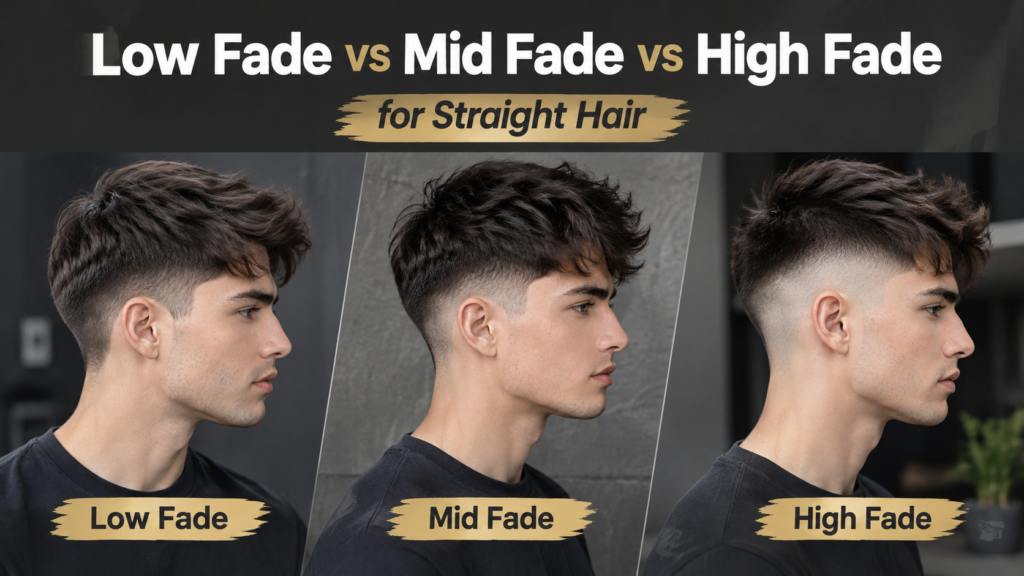
Straight hair shows everything. Every clipper line, every uneven blend, and every grow-out stage is visible, because there is no texture to hide it.
What works well:
- Low fade: A natural fit. It looks neat even when your top hair falls flat, and it grows out cleanly.
- Mid fade: A strong all-rounder. It pairs well with side parts, slick backs, and short crops.
- High fade: Works best with a defined top, like a pompadour or a textured quiff. Without styling, straight hair on a high fade can look flat or severe.
Tips for straight hair:
- Use a light matte clay or paste to give the top some grip.
- Ask your barber to blend carefully, since straight hair exposes weak transitions.
- Book earlier touch-ups if you choose a skin fade.
If you have very straight, fine hair, a low or mid taper fade usually gives the cleanest, most natural result.
Low Fade vs Mid Fade vs High Fade for Curly Hair
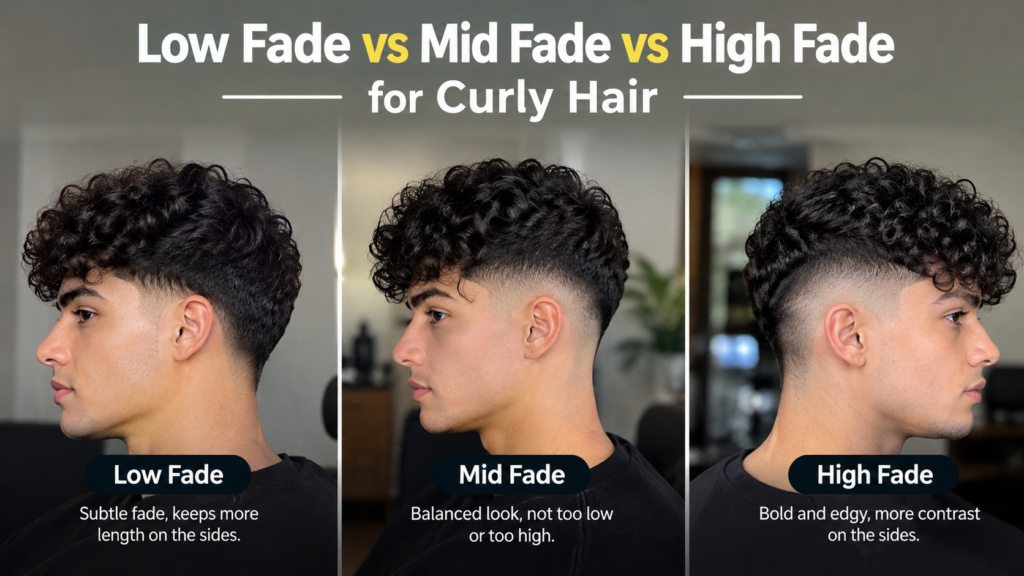
Curly hair and fades are a great match. The tight sides frame the curls on top and make them look intentional.
What works well:
- Low fade: Keeps the overall shape soft. Great for loose curls and longer styles.
- Mid fade: The sweet spot. It gives curls enough room to breathe while keeping the sides tidy.
- High fade: A bold choice that shows off tall curls, twists, or an afro. The contrast is sharp and stylish.
Tips for curly hair:
- Ask for the top to be cut with scissors or a comb so the curl pattern stays natural.
- Moisturise after the cut. Fresh clipper work can leave the skin dry.
- Avoid fading too close if you often get razor bumps. A taper is gentler than a skin fade.
- Wash and condition the top regularly so curls stay defined.
Curly hair also hides regrowth better than straight hair, so you may get an extra few days out of each cut.
Which Fade Suits Your Lifestyle?
A haircut should work with your life, not against it. Here is how to match the fade to your daily routine.
| Your Situation | Best Fade |
| Corporate or formal workplace | Low fade or low taper |
| Creative or casual workplace | Mid fade or high fade |
| Student or young professional | Mid fade |
| Athlete or gym regular | Low or mid fade (easy to keep clean) |
| Busy schedule, rarely visit the barber | Low taper fade |
| Love changing styles | Mid fade (most flexible) |
| Want a bold, standout look | High skin fade |
| Hot climate | Mid or high fade (cooler on the sides) |
Think About Time and Budget
Higher fades need more frequent visits. If you can only get to the barber once a month, a low fade will hold its shape much longer. If you enjoy a standing appointment every two weeks, a high fade is perfectly manageable.
Prices at most barbershops are similar across low, mid, and high fades, because all three need careful blending. The real cost difference is how many visits you need each month.
Best Fade Styles to Try in 2026
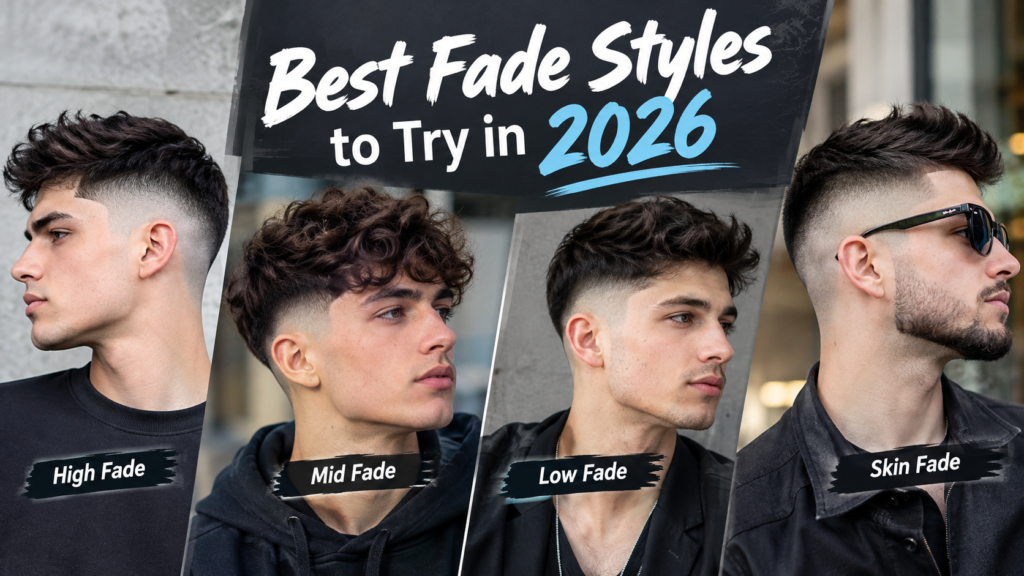
Fade height is the foundation. The top is where you add personality. Here are popular combinations to bring to your barber.
Low Fade Styles
- Low taper with a textured crop: Short, easy, and clean. Great for work.
- Low fade with a side part: Classic and professional.
- Low fade with a brush-up: A little height without any fuss.
- Low drop fade: The blend curves down behind the ear for a modern twist.
Mid Fade Styles
- Mid fade with a quiff: Volume on top, clean on the sides. Very versatile.
- Mid skin fade with a French crop: Short, sharp, and low effort.
- Mid fade with curls: Keeps the curls front and centre.
- Mid fade with a pompadour: A bold shape that still feels refined.
High Fade Styles
- High skin fade with a tall textured top: Maximum contrast.
- High fade with twists or coils: A strong, stylish look for textured hair.
- High fade with a buzz cut: Minimal and sharp.
- High drop fade with a slick back: Dramatic shape, polished finish.
Trends Worth Watching
- Soft, natural-looking tapers rather than very harsh skin lines.
- Textured, slightly messy tops over rigid, heavily styled ones.
- Subtle line-ups instead of razor-sharp, geometric edges.
- Longer tops paired with mid fades for a relaxed, lived-in feel.
Trends come and go. A good fade, cut well, will look good in any year.
What to Tell Your Barber
Clear communication is the secret to a good fade. Here is a simple four-step script.
- Name the height: “I’d like a mid fade,” or “Low fade, please.”
- Name the finish: “Skin fade” or “taper.” If unsure, say “taper, not too short at the bottom.”
- Describe the top: “Leave about two inches on top, textured.”
- Show a photo: A picture removes all ambiguity.
Extra Details Worth Mentioning
- Do you want a line-up (sharp edges around the forehead and temples) or a softer natural hairline?
- Should the beard blend into the fade, or stay separate?
- How much contrast do you want: subtle, medium, or strong?
- How long can you go between visits?
Phrases That Help
- “Can you start the fade a little lower than usual?”
- “I want it to grow out nicely.”
- “Please keep it natural around my hairline.”
Common Fade Mistakes
| Problem | Why It Happens | Fix |
| Fade is higher than expected | Height was not clearly described | Bring a photo and point to the exact starting point |
| Blend looks patchy | Rushed work or wrong guard | Ask the barber to re-blend before you leave |
| Looks too harsh | Skin fade on a sensitive hairline | Ask for a taper next time |
| Grows out unevenly | Fade too high for your hair type | Try a lower fade |
A good barber will welcome questions. If you are unsure, ask: “What height would you suggest for my face and hair?”
How Often Should You Get Each Fade?
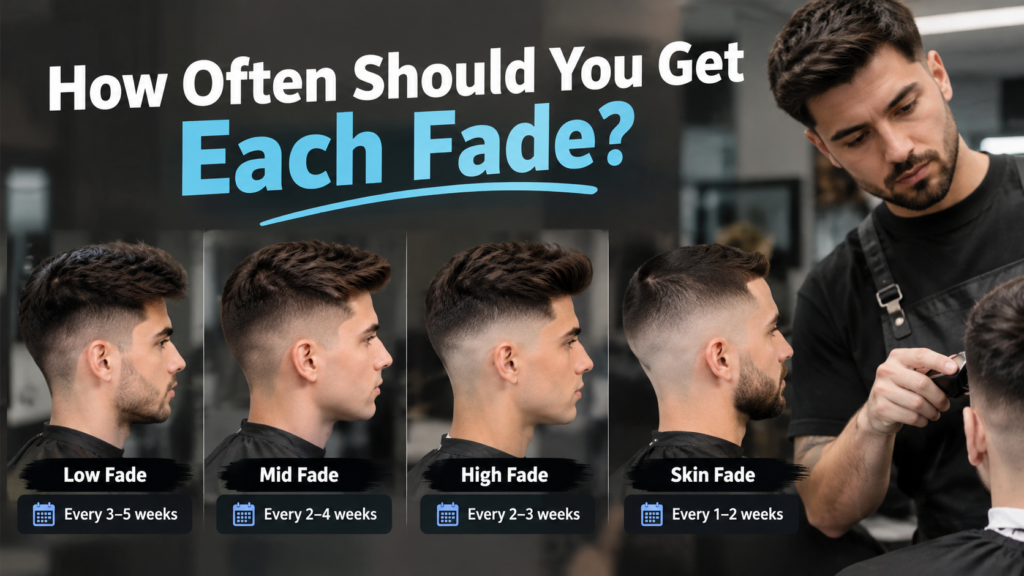
Fades are a “keep it fresh” haircut. The sharper the contrast, the sooner it softens.
| Fade Type | Ideal Trim Window | Stretch Limit |
| Low fade / low taper | Every 3–4 weeks | Up to 5 weeks |
| Mid fade | Every 2–3 weeks | Up to 4 weeks |
| High fade | Every 1–2 weeks | Up to 3 weeks |
| Skin fade (any height) | Every 1–2 weeks | Up to 3 weeks |
What Happens as It Grows Out
- Week 1: Fresh and sharp. This is the peak.
- Week 2: The shortest areas begin to fill in. Most people still look great.
- Week 3: The blend softens. Low and mid fades are at the decision point.
- Week 4+: The shape is lost. High and skin fades look noticeably untidy.
Making Your Fade Last
- Use a small trimmer to clean up the neckline between visits (only if you are confident).
- Wash regularly to prevent buildup around the shaved zones.
- Moisturise the scalp. Dry skin shows up fast on close cuts.
- Use sunscreen on exposed areas in warm months.
- Book your next appointment before you leave.
If you want to cut costs, choose a low taper. It stays presentable for the longest time.
Quick Decision Guide
Still unsure? Work through these questions.
Step 1: How bold do you want to look?
- Subtle → Low fade
- Balanced → Mid fade
- Bold → High fade
Step 2: How often can you visit the barber?
- Once a month → Low fade
- Every two to three weeks → Mid fade
- Every one to two weeks → High fade
Step 3: What is your face shape?
- Round → Mid or high
- Square → Low or mid
- Long → Low
- Oval → Anything works
Step 4: What is your workplace like?
- Formal → Low
- Mixed → Mid
- Creative or casual → Mid or high
The One-Line Summary
| If You Are… | Ask For… |
| Playing it safe | Low taper fade |
| Not sure yet | Mid fade |
| Ready for a statement | High skin fade |
Frequently Asked Questions
What is the difference between a low fade, mid fade, and high fade?
The difference is where the fade starts. A low fade starts near the ear, a mid fade around the temple, and a high fade well above the temple.
Which fade is best for beginners?
A low or mid fade is the safest choice. Both look clean, grow out gracefully, and are easy to adjust at the next visit.
Is a mid fade better than a low fade?
Neither is better. A mid fade shows more contrast, while a low fade looks subtler and is easier to maintain.
Is a high fade more difficult to maintain than a low fade?
Yes. A high fade shows regrowth faster, so most men need a touch-up every one to three weeks.
What is a skin fade vs a high fade?
A skin fade describes how short the cut goes (down to the skin). A high fade describes where the blend starts. You can have a low, mid, or high skin fade.
Which fade is best for round faces?
A mid or high fade works well. Tight sides and height on top make a round face look longer.
Which fade suits a square face?
A low or mid fade is usually best. The softer blend balances a strong jawline.
Which fade works best for curly hair?
A mid fade is the most flexible choice. A high fade shows off tall curls, while a low fade keeps things softer.
Which fade is best for thin or fine hair?
A low or mid fade. Keeping some side length avoids exposing thin areas and makes hair look fuller.
Which fade is best for a professional workplace?
A low fade or low taper fade. It looks neat, subtle, and appropriate in nearly any office.
How often should I fade?
Low fades last three to four weeks. Mid fades need a trim every two to three weeks. High and skin fades need one every one to two weeks.
Does a low fade cost less than a mid fade?
Usually not. Most barbershops charge about the same, because every fade needs careful blending.
Can I get a fade with long hair on top?
Yes. The fade only affects the sides and back, so you can keep length on top and style it any way you like.
Do fades damage your hair?
No. A fade is just a clipper cut. Close shaving can irritate sensitive skin, so moisturise and choose a taper if you get razor bumps.
What should I say to my barber to get the right fade?
Say the height (low, mid, high), the finish (skin or taper), and how much length you want on top. Bring a photo to avoid mix-ups.
Conclusion
There is no single “best” fade, only the best fade for you. Here is how it all comes together:
- Low fade: Quiet, polished, and forgiving. Perfect for offices and busy schedules.
- Mid fade: The balanced all-rounder. Works for most faces, hair types, and styles.
- High fade: Bold, sharp, and attention-grabbing. Ideal if you love a statement look and do not mind regular upkeep.
If you are unsure, start with a mid fade. It sits right in the middle, so it is easy to move higher or lower next time. Pay attention to how it grows out, how it feels in your daily routine, and how you feel when you look in the mirror.
Take a photo to your next appointment, tell your barber the height and the finish, and be honest about how often you can visit. A great fade is half technique and half clear communication.
Ready to try something new? Book your next cut, pick your height, and walk out sharp.

George Parker is a content writer and the author behind Peak Faxhion, a blog focused on wishes, greetings, and messages for special occasions. George researches topics carefully and creates clear, useful, and reader friendly content to help people find meaningful words for birthdays, celebrations, festivals, anniversaries, and everyday moments.